
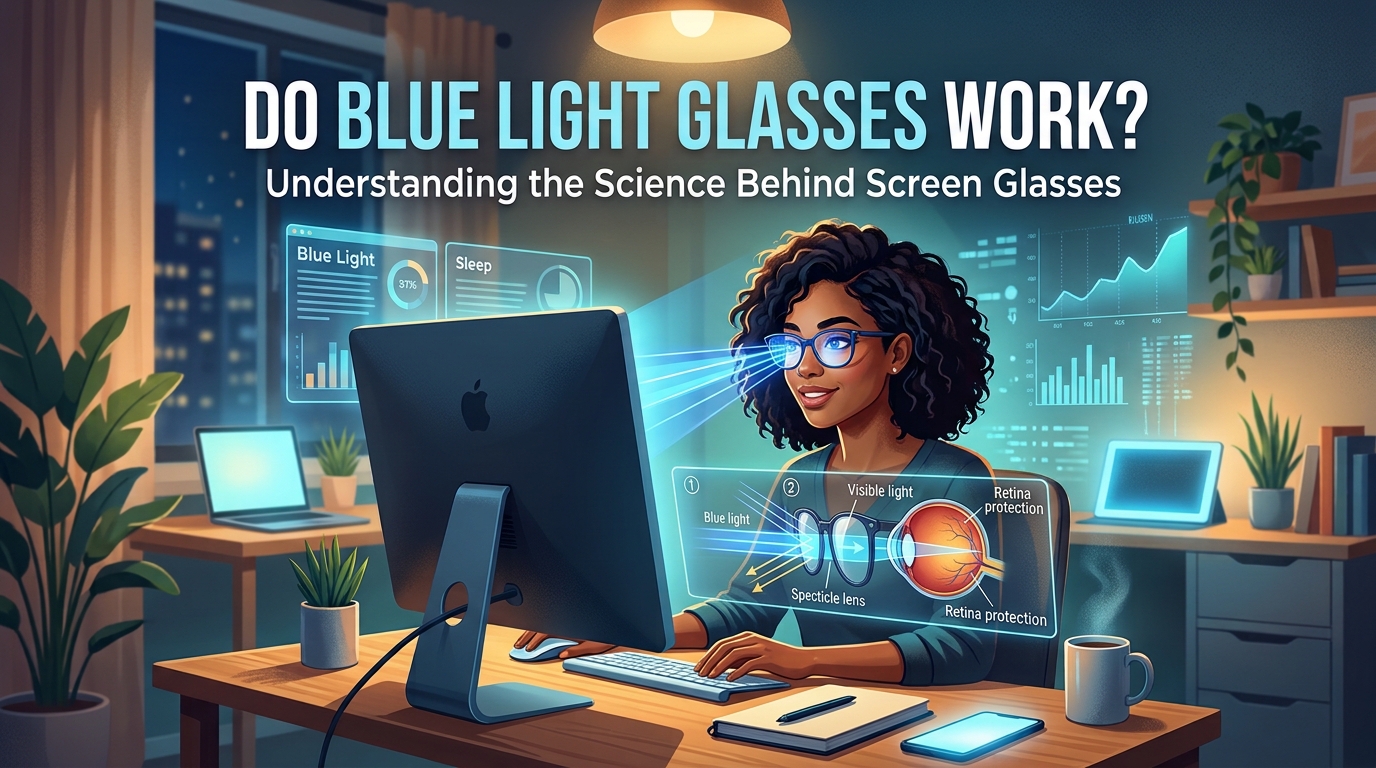

Understanding the Science Behind Screen Glasses
Written by Dr. Shopia, in the fields of optometry and digital eye health
Dr. Shopia is a digital eye health specialist and deals with vision care and eye issues related to screens. She has experience in helping patients with technology-related visual discomfort and puts complex eye health issues into perspective for the practical user and also gives out evidence based advice for you to improve your vision health.
Do blue light glasses live up to their claims of improved screen protection, or are they a trend that makes big promises without the support of results?
Blue light filters in glasses which are a design to block some of the blue light from digital screens and artificial lighting. Though some report to feel better wearing them which is great, science doesn’t really back up that they prevent eye damage or completely remove digital eye strain. EyeWiki
The reason is simple: most screen-related discomfort comes from how we use digital devices, including long periods of focusing, reduced blinking, poor lighting, and limited breaks—not only from blue light exposure.
Do Blue Light Glasses Actually Work? What the Science Really Says
Blue light glasses do filter some blue wavelengths, but whether they provide meaningful health benefits depends on what problem you are trying to solve.
The response is more sophisticated than “yes” or “no.”
Blue light glasses may make screens more comfortable for some people by reducing particular wavelengths or altering the display’s look. However, current research does not support the notion that these glasses are a guaranteed solution for:
• Digital eye strain
• Eye damage from screens.
• Vision protection.
• Improved sleep for everyone.
A 2023 Cochrane study examined available evidence on blue-light filtering lenses and discovered that these lenses may make little or no impact in reducing short-term eye strain from computer use when compared to conventional lenses. The assessment also discovered that the evidence for sleep benefits was inconclusive. (Cochrane)
What Are Blue Light Glasses Designed to Do?
Blue light glasses employ unique lens coatings or materials to minimize the quantity of blue light that reaches your eyes. Blue light, is part of the visible light spectrum, can be emitted by a variety of natural and manmade sources.
Common sources include:
• Sunlight.
• LED Bulbs
• Computer Monitors
• Smartphones.
• Tablets
In televisions, the lenses may function as follows:
• Filtering for certain blue wavelengths.
• Reducing glare.
• Screen colors are somewhat warmer.
• Adjusting visual comfort for certain users.
However, they do not form a protective barrier over your eyes and do not completely block blue light.
Why Do People Feel Eye Strain After Screen Use?
Many individuals believe that blue light is the primary reason their eyes feel weary after utilizing devices. However, other factors often contribute to digital eye strain.
Common causes include:
Reduced blinking
When people concentrate on displays, they tend to blink less frequently.
Lower blink rates may contribute to:
• Dry eyes.
• Burning sensations.
• Irritation.
• Blurred vision may occur temporarily.
• Long periods of close focus.
When viewing surrounding objects, your eyes are continuously adjusting.
Spending hours focused on:
• A laptop.
• A telephone.
• Using a tablet without breaks may cause eye fatigue.
Poor Screen Setup
Small modifications can make a big effect.
Common difficulties include:
• Monitor is too close
• Screen glare
• Incorrect brightness
• Poor posture
A comfortable workspace is often more beneficial than simply changing eyewear.
Lack of Breaks
The eyes need regular periods of relaxation.
A common recommendation is the 20-20-20 approach:
Every 20 minutes:
- Look at something about 20 feet away
- For around 20 seconds
This helps reduce continuous focusing demand.
Can Blue Light Glasses Reduce Eye Strain?
According to the facts, blue light spectacles are not a cure-all for digital eye strain.
There is no strong evidence that blue-light filtering lenses outperform conventional lenses in terms of minimizing computer-related eye pain. According to Cochrane, some individuals may still want to use them for the following reasons:
• They prefer the warmer screen image.
• They experience fewer glares.
• They find them more comfortable for extended sessions.
• They feel inspired to follow healthy screen habits
The essential distinction is that personal comfort does not always imply that the glasses offer a medically validated advantage.
Blue Light Glasses for Office Workers: Is it Worth It?
Office workers are one of the most interested groups in blue light spectacles.
A typical professional might spend:
• Spending 7-10 hours on a computer.
• Increased time spent checking smartphones.
• Spending evening hours watching screens.
It is reasonable that many individuals seek an easy solution.
However, the most effective technique typically incorporates numerous habits rather than depending alone on glasses.
What Helps Office Workers More Than Blue Light Glasses?
Improve Screen Position
A better desk setup can relieve unnecessary strain.
Try:
• Keep the monitor at an arm’s length away.
• Position the screen near eye level.
• Avoiding direct window reflections.
• Adjust the brightness and contrast.
Your screen should not be noticeably brighter or darker than your surroundings.
Adjustments that are helpful include:
• Reduce excessive brightness.
• Increase text size as needed.
• Choose comfortable contrast settings.
Take Regular Movement Breaks
Long hours of sitting have an effect on more than just your eyes.
Short breaks can assist you.
• Relax your vision.
• Improve posture.
• Reduce physical tension.
Manage dry eyes.
If you experience dry eyes while using a computer:
Useful habits include:
• Remember to blink fully.
• Taking screen breaks.
• Use artificial tears as advised by an eye expert.
Do Blue Light Glasses Help With Sleep?
Sleep is one of the most prevalent reasons why people purchase blue light glasses.
The problem stems from the link between blue light exposure and the body’s circadian rhythm, which regulates sleep and wake cycles.
Blue light exposure, particularly at night, can affect alertness and melatonin production. However, research on whether blue light spectacles considerably improve sleep quality remains inconclusive. (PubMed Central (PMC))
When Might Blue Light Glasses Be Useful at Night?
Some people choose to wear blue light spectacles during:
• Late-night computer work.
• Evening gaming sessions.
• Prolonged phone use before bedtime.
They may find them personally comfortable, particularly if they like screens with warmer colors.
However, increasing sleep typically necessitates addressing the larger habits:
• Reduce stimulating content before bedtime.
• Maintaining a consistent sleep routine.
• Reduce screen brightness.
• Creating a dark bedroom environment.
Blue light from screens versus natural blue light
Not all blue light exposure is equal.
The sun produces far more blue light than digital electronics.
Screens normally create considerably lesser levels, and current research does not indicate that routine screen exposure causes permanent eye damage. The American Academy of Ophthalmology does not suggest special eyewear only for computer use because there is no scientific evidence that screen blue light hurts the eyes. (EyeWiki)
How to Tell If Your Blue Light Glasses Are Actually Working
One of the most difficult issues with blue light glasses is that their effects are frequently subjective. Unlike prescription lenses, which plainly improve vision, blue light glasses are typically judged on comfort and personal experience.
Instead of just asking, “Do my glasses block blue light?” A better inquiry is:
“Do I notice any significant improvement in my screen experience?”
Consider practical adjustments, such as:
• Reduced glare when using screens.
• Enjoy a more comfortable viewing experience during long computer sessions.
• Reduced eye fatigue.
• Improved evening screen comfort.
However, if you continue to have substantial discomfort, blue light glasses may not be addressing the root cause.
Signs That Your Eye Strain May Not Be Related To Blue Light
If still having issues with blue light glasses on.
Possible reasons include:
Incorrect Prescription
If your glasses’ prescription is out of date, blue light lenses will do you no good.
Signs may include:
• Blurry vision
• Difficulty focusing
• Frequent squinting
• Headaches
Dry Eye Problems
Screen time reduces blinking, which causes dryness.
Common symptoms:
• Burning
• Gritty feeling
• Watery eyes
• Redness
Poor Ergonomics
Your workspace is out of balance.
Check:
• Screen height
• Sitting position
• Lighting
• Viewing distance
Too Much Continuous Screen Time
Even at their best, lenses do not replace breaks.
A worker that puts in eight hours without a break will report more discomfort than a person who takes short breaks.
Who should buy Blue Light Glasses?
Blue light glasses aren’t for all, but some people do opt for them based on what they prefer and how they live.
They are worth of your time if you:
Spend Many Hours on Screens
Examples:
• Software developers
• Designers
• Remote workers
• Students
• Gamers
These users prefer extra comfort during long screen time.
Work Late at Night
People at it every night on screens may see which blue waves are reduced with certain lenses.
However, better sleep habits remain important.
Experience Screen Discomfort
If you see that screens cause discomfort blue light glasses may be part of a larger solution which also includes:
• Better lighting
• Breaks
• Proper screen setup
• Eye examinations when needed
Who May Not Need Blue Light Glasses?
Many people buy blue light glasses expecting benefits that have not been proven.
You may not need them if you:
- Rarely use screens
- Have no discomfort
- Expect them to prevent eye diseases
- Want a replacement for regular eye care
Blue light glasses should not replace:
- Prescription glasses
- Regular eye exams
- Healthy screen habits
Blue Light Glasses vs Regular Glasses: What Is the Difference?
The main difference is the lens coating or filtering technology.
| Feature | Blue Light Glasses | Regular Glasses |
| Main purpose | Filters some blue light wavelengths | Corrects vision |
| Prescription required | No, unless combined with prescription lenses | Usually based on eye prescription |
| Helps blurry vision | No | Yes |
| Blocks all screen-related discomfort | No | No |
| Useful for vision correction | Only when prescription is added | Yes |
A person with nearsightedness, farsightedness, or astigmatism still needs appropriate prescription lenses. Blue light filtering alone will not improve focus.
Common Myths About Blue Light Glasses
Myth 1: Blue Light Glasses Prevent Eye Damage From Screens
This is one of the most common marketing claims.
Current evidence does not show that everyday screen exposure causes permanent eye damage that can be prevented by blue light glasses.
The American Academy of Ophthalmology does not recommend special eyewear specifically for computer use because there is no scientific evidence that screen blue light damages the eyes. (aao.org)
Myth 2: More Blue Light Blocking Means Better Protection
A higher blocking percentage does not automatically mean better results.
A very strong filter may:
- Change colors significantly
- Make screens appear yellow
- Affect color accuracy
This can be inconvenient for:
- Graphic designers
- Photographers
- Video editors
The best lens depends on your needs.
Myth 3: Blue Light Glasses Replace Screen Breaks
No glasses can replace healthy viewing habits.
The eyes still need:
- Distance changes
- Rest periods
- Proper blinking
- Comfortable lighting
Myth 4: Everyone Needs Blue Light Glasses
Some people enjoy wearing them, while others notice no difference.
The value depends on:
- Personal comfort
- Work environment
- Screen habits
- Expectations
What Should You Look for When Buying Blue Light Glasses?
If you decide to try blue light glasses, focus on quality rather than exaggerated claims.
Check the Lens Information
Look for details about:
- Wavelength range filtered
- Testing information
- Lens coating quality
Avoid products that only make vague claims like “100% eye protection” without explaining what that means.
Consider Your Daily Activities
Different users have different needs.
Office Workers
Prioritize:
- Comfortable lenses
- Anti-reflective coating
- Lightweight frames
Gamers
Consider:
- Comfortable fit
- Reduced glare
- Durable frames
Designers and Creatives
Be careful with heavy blue filters because they may affect color accuracy.
Choose Comfortable Frames
You may wear these glasses for several hours.
Look for:
- Lightweight materials
- Proper fit
- Comfortable nose support
- Adjustable arms
Comfort often matters more than the filtering feature itself.
Improved Methods for Reducing Digital Eye Strain
Blue light glasses are a choice option. Also many experts put forth that proven practices we implement first.
Follow this 20-20-20 rule
Every 20 minutes:
• Look 20 feet away
• For 20 seconds
This gives your focus a rest.
Tweak Your Work Space.
A proper arrangement may also reduce that which is unnecessary strain.
Recommended habits:
· Keep screens at a comfortable viewing distance.
· Reduce glare
· Adjust screen height
· Use appropriate lighting
· Raise awareness for Blink
During the times that you are intensely at your screen, remember to fully blink.
If your dryness persists, consult an eye care professional for solutions.
Reduce Evening Screen Time.
For better sleep:
• Reduce bright screens before bedtime
• Use dim lighting
• Keep a consistent sleep schedule
Avoid engaging in stimulating activities before bed.
Schedule Eye Exams Regularly.
Eye exams are for issues that blue light glasses don’t which out.
An eye-care professional can check for: An ophthalmologist can determine which of the following for you:
• Vision changes
• Prescription needs
• Eye health concerns
Frequently Asked Questions
Do blue light glasses actually work?
Blue light glasses do reduce some of the blue light which reaches the eye, but at this time there is not strong research to support that they greatly reduce digital eye strain or prevent eye damage. Some people may find them comfortable which is a pro, but results may vary by individual.
Are blue ray filters worth it for office workers?
They may have it in that you put in lots of time in front of screens which you find the filtered lenses’ feel is to your taste. But that said, which of, improved work station design, breaks, and dry eye management rather is what most people see to have success in reducing screen related issues.
Can blue light glasses improve sleep?
They may benefit some individuals that are affected by evening light exposure, at the same time research has not proven the same results for all. Also reducing night time screen brightness and maintaining healthy sleep practices is also a must.
How can I tell if my blue light glasses are working?
Notice if there is an improvement in your comfort during screen use. If you still have headaches, blurry vision, or eye discomfort we may not be looking at a blue light issue which will require that you change your habits or get an eye exam.
Do children need blue light glasses?
There is little to no evidence that kids require blue light glasses for screen protection. Instead parents should pay attention to health screen practices, breaks, outdoor play, and regular vision checkups.
Can I have blue light glasses on all day?
Yes it is the case that many people wear them all day when they find them comfortable. At the same time which is to say that wearing them doesn’t do away with the need for good screen practice and regular eye care.
Are expensive blue light glasses better?
A high price does not guarantee better results. See to it that you choose frames which are comfortable, which have reliable lens info, and which include features that meet your needs instead of what the marketing material says.
Final Thoughts
So what of blue light glasses? What we have is that they do a good job at filtering some blue light and may in fact improve your comfort when using digital devices but they aren’t a sure thing when it comes to eye protection from digital eye strain or better sleep quality.
Taking breaks often, improving your workspace’s layout, which also includes reducing glare, which in turn allows you to manage screen time better and to also maintain a regular eye care routine.
Blue light glasses may be a personal choice but they should instead be looked at as a piece of a greater digital eye health plan as opposed to a stand-alone solution.