
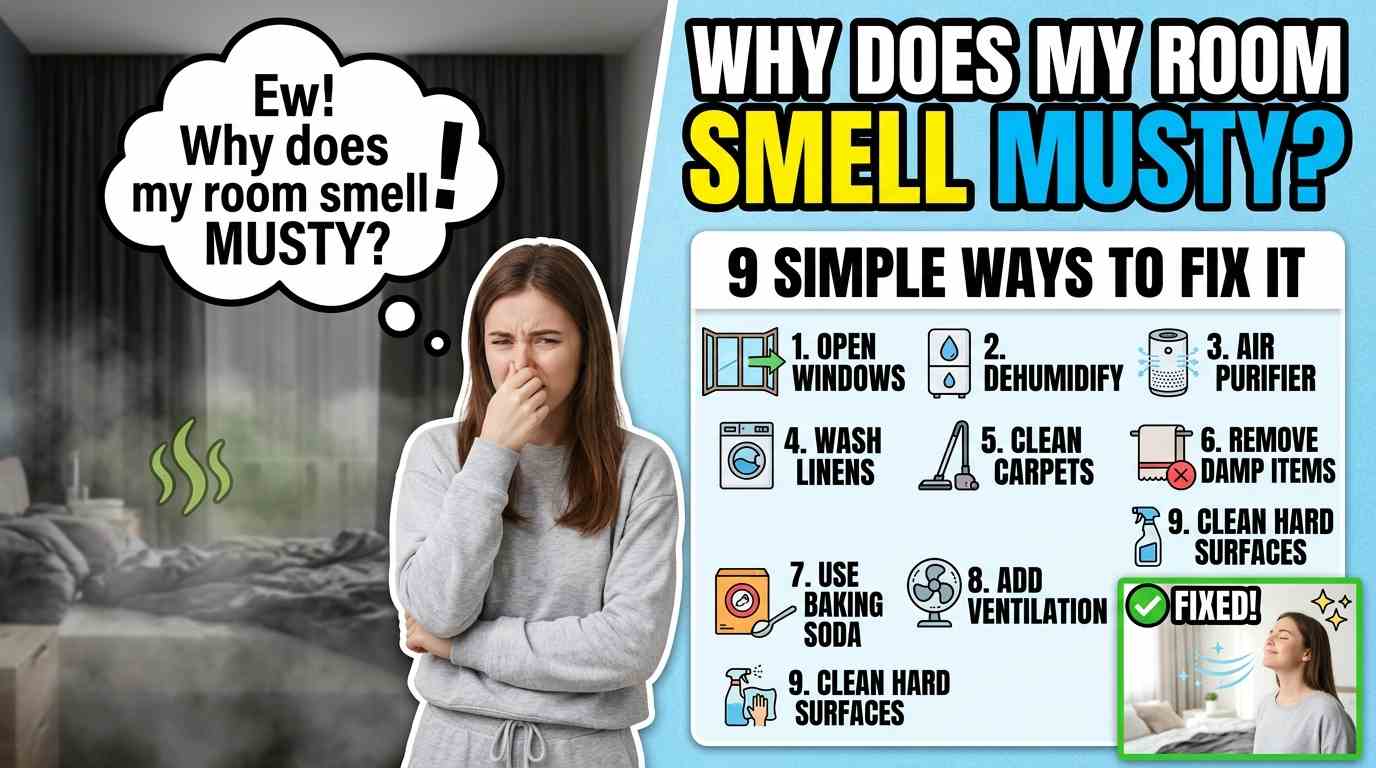

A few summers ago, I visited my aunt on the humid Gulf Coast, where damp indoor air is a common problem. Her home looked clean, but the guest room had a heavy, earthy smell that made the visit uncomfortable. When I returned home, I researched musty odors and found that hidden moisture doesn’t happen because of poor cleaning. After returning home, I spent several hours finding the real reasons and solutions. If you are wondering, “Why does my room smell musty?” check for high humidity, poor airflow, damp fabrics, plumbing leaks, mold, dirty vents, and nearby drains. I have shared these tips with friends, relatives, and neighbors facing similar problems. Many improved their rooms after finding the moisture source instead of covering the odor with air freshener.
What Causes a Musty Smell?
A musty smell is a stale, damp, or earthy odor. It often develops when moisture becomes trapped in carpet, furniture, clothing, drywall, or another material.
Mold is one possible cause, but it is not the only one. Wet towels, dirty air-conditioning units, old carpet padding, and unused drains can produce similar odors.
The CDC says mold may appear in different colors and can have a musty smell. If you see or smell mold, its guidance is to remove it and correct the moisture problem that allowed it to grow. CDC mold guidance
In humid parts of the United States, indoor moisture can stay high even when a room looks dry. That is why I suggest checking the humidity before buying another cleaning product.
Check These Places First
Walk around the room and notice where the smell becomes stronger. Check near the floor as well as around the ceiling. Look behind beds, wardrobes, curtains, and other large furniture. In many apartments, these items sit against cooler exterior walls where condensation can form. If the odor becomes stronger near a slow sink, follow these steps to [unclog the drain] before using air freshener. A small humidity meter, known as a hygrometer, can help you understand the room’s moisture level. The EPA recommends keeping indoor relative humidity below 60%, with 30–50% being the ideal range when possible. EPA mold and moisture guidance
1. Get the Air Moving
Closed rooms hold moisture and stale air. Start by opening the windows when the weather and outdoor air quality allow. If possible, open a second window or door elsewhere in the apartment. This creates cross-ventilation and moves air through the room instead of allowing it to sit in one place.
Use the bathroom exhaust fan during showers and the kitchen fan while cooking. Both activities release moisture into the air. Leave the fan running briefly afterward so it can remove the remaining steam.
2. Lower the Humidity
If the humidity repeatedly rises above 50–60%, a dehumidifier can help. Choose one suited to the size of the room and empty its tank regularly. Clean the filter and water container according to the manufacturer’s instructions. A dirty dehumidifier can develop its own unpleasant odor.
3. Find and Report Water Leaks
A slow leak behind a wall or beneath the floor can create a strong smell before you see obvious water. Check around sinks, toilets, washing machines, radiators, windows, and air-conditioning units. Look at the ceiling after heavy rain, particularly if you live on the top floor. In an apartment building, water may come from another unit or a shared pipe. A wet area may therefore appear far from the original leak.
Signs of hidden water include:
· Yellow or brown stains
· Paint bubbles
· Soft drywall
· Swollen wood
· Loose flooring
· Damp baseboards
· A smell that becomes stronger after rain
4. Clean Small Areas of Mold Carefully
A small patch of mold on a hard, washable surface may sometimes be cleaned at home. Fix the moisture source first, or the mold will probably return. Wear gloves and eye protection. Open a window or door for ventilation and follow the directions on the cleaning product. The CDC says mold on some hard surfaces may be cleaned with household products, soap and water, or a diluted bleach solution. Its guidance says not to use more than one cup of household bleach in one gallon of water. CDC mold-cleanup guidance
Never mix bleach with:
· Ammonia
· Vinegar
· Drain cleaner
· Rubbing alcohol
· Other household cleaners
These combinations can release dangerous gases or cause harmful reactions.
Contact a mold professional or building manager when:
The mold has covered that of 10 square feet.
5. Wash Damp Fabric
Fabric may retain a musty smell for a while after the room is dry. Look in to bedding, curtains, rugs, clothing, towels, upholstered chairs, and fabric storage boxes. Remove from the washable items and put them in the machine according to what the care labels direct. Dry each piece in air completely before putting them back in the room.
6. Examine Carpets and Floors
Carpet is a place which absorbs water from spills, wet shoes, leaks, pet accidents, and also from condensation. The floor may look dry but in fact the padding is still wet. Rub in a clean paper towel to those which are suspicious. Look at the carpet by the windows, radiators, exterior walls, and around the plumbing. Vacuum out the dust and for minor stains use a product which is meant for that carpet type. Do not put too much liquid on the floor. For hard surfaces, take out area rugs and check the edges. Dampness may be present if laminate is lifted, grout is dark, or wood is swollen.
7. Clean Vent and Air Conditioning Filters
A room that has musty air at start up may have a dirty filter, blocked drain line, wet condensation tray, or interior buildup. Replace or clean filters as per manufacturer’s instructions. Use vacuum to remove dust from accessible vent covers do not insert tools into ductwork.
Turn off and unplug the window air conditioner before you begin the cleaning. Look out for standing water, visible build up, or a clogged drainage point.
8. Check Sinks and Drains
A bathroom, kitchen, laundry, or floor drain can send an unpleasant smell into a nearby room. Drain odors are not always musty, but they can mix with damp air and create a stale smell. Pour water into a drain that has not been used recently. This refills the trap, which normally blocks sewer gases. Unused sinks, guest bathrooms, and floor drains commonly develop odors when their traps dry out.
Call a plumber or report the problem if:
· Several drains smell at once
· You hear regular gurgling
· Sewage backs up
· The smell remains after adding water
· Water is leaking inside a cabinet
· The odor clearly resembles sewer gas
9. Remove Food, Trash, and Pest Sources
Old food normally smells sour or rotten rather than musty. However, a dirty trash can, food crumbs, recycling, pet food, or spilled drinks can make a stale room smell worse. Empty the trash and recycling. Wash the containers and dry them fully before adding new liners.
My Quick Musty-Room Check
This is the order I recommend when a friend or neighbor cannot find the source:
1. Remove trash, food, wet laundry, towels, and shoes.
2. Open the closet and pull furniture away from walls.
3. Inspect windows, ceilings, baseboards, and carpet edges.
4. Smell near drains, vents, and air conditioners.
5. Measure the humidity with a hygrometer.
6. Run the exhaust fan, air conditioner, or dehumidifier.
7. Report leaks or water damage.
8. Clean only the affected areas you can handle safely.
9. Check the room again after 24–48 hours.
If the odor disappears after removing laundry or bedding, wash and dry those items before returning them. If it disappears while a dehumidifier is running but returns when the machine is turned off, the room may have high humidity or an ongoing source of moisture.
Things That Only Hide the Problem
· Air Fresheners and Candles
Fragrance may hide the odor for a short time. It cannot dry wet drywall, clean mold, or repair a leaking pipe. Strong scents can also make it harder to find where the original smell is coming from.
· Baking Soda
Baking soda can remove light odors from a small space like a closet. It does not change overall room humidity or fix water damage. Use it after the moisture source is removed, not as a primary solution.
· Fresh Paint
Painting over a stain may make a room look presentable at first, but moisture will still be present under the new coat.
· A Fan Pointed at Mold
Fans used for drying clean wet surfaces. Also do not point at visible mold as that will spread particles around the room. Stay away from large moldy areas and get professional help.
· Home Mold Tests
The CDC does not typically recommend routine home mold testing. If you see or smell mold do which is to remove it safely and to fix the moisture source.
When to Reach Out to the Building Manager?
A renter may clean out damp laundry or improve air flow, but to address structural issues they will have to bring in the property owner or maintenance staff.
Report the issue when it involves: Report if issue related to:.
• A roof or window leak
• Shared plumbing
• An outside wall
• Water from another apartment
• A shared ventilation system
• Recurring mold
• A sewage odor
• Damp floors, ceilings, or walls
• Water entering after rain
Can Your Health be Affected by Musty Odors in a Room?
People react in different ways to mold. You may see coughing, wheezing, nasal congestion, eye irritation, or skin irritation. Also people with allergies, asthma, lung disease, or weak immune systems may be more sensitive.
A rotten smell in itself does not point to a medical issue. If symptoms are severe, of long duration, or come and go when you leave and return to the room see a health care provider.
People with weak immune systems or chronic lung issues should avoid doing mold clean up yourself. Professional help may be a better option.
Frequently Asked Questions
My room has a musty smell in the morning which is what?
In closed rooms overnight breathing, damp bedding, and poor air flow may increase moisture levels. Try to open the room up more, change out the bedding, check for condensation, and also put furnishings back from cold outer walls.
Why is smell more intense during rain?
A smell of what comes after rain may be a sign of water getting in via the roof, at the windows, the exterior walls, or the foundation. Watch out for new spots or wet areas and report these at once.
Will a dehumidifier remove the smell?
A dehumidifier is a solution for when high humidity is causing odors. It does not however fix a leak or get rid of present mold. Go for indoor humidity of between 30-50% at the same time which also you should do to identify the source of the moisture.
Why is the room musty?
Moisture from mold may be present in your walls, under carpet, in the furniture, or in the air conditioner. Also it may be that you have damp fabrics, poor ventilation, or unclean drainage which produce the same smells.
Does opening a window prevent mold?
Opening of windows which in turn improves air flow and also removes moist from indoor air is a solution. It may not work on very humid days. For which you may also require exhaust fans, air conditioners, to repair leaks or get a dehumidifier.
Is your health at risk in that musty room?
A laundry which is damp may have a mild smell that is easily corrected. For strong and persistent odors which also include mold, water damage, or health issues get it looked at right away. At risk individuals should stay out of very moldy rooms.
How quickly should the smell disappear?
Stale air may see improvement within hours after proper venting. Damp materials will outgrow their smell after being washed, and then dried. Issues from leaks, carpet padding, drain problems, or secret mold growth will persist until the fix is applied.
Remove the Moisture, Not Just the Smell
If you are still at it trying to figure out what is causing that musty smell in your room start with the moisture issue instead of the fragrance. Check the humidity level, look into hidden spaces, check out the pipes and drains, and get rid of damp fabrics.
Living in a humid climate in the US has taught me that smell comes back when you only clean the surface. Fix the leak, the humidity, the drainage, or the ventilation issue first. Once the source is out and the affected materials are dry out, the room will stay fresher for a great deal of time.