
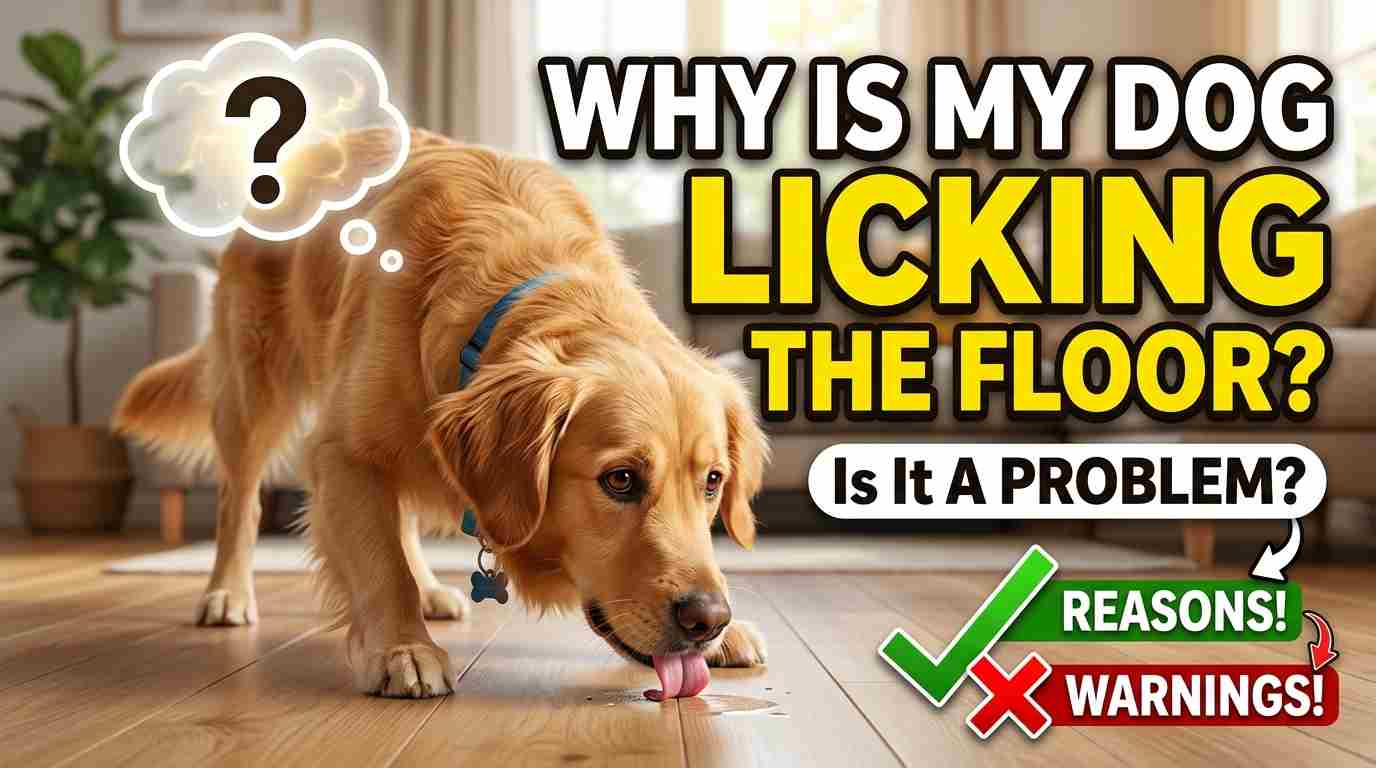

A phone often lands on my examination table before the dog does. The owner presses play, and there is their pet licking the tile, carpet, or kitchen floor as if something is hidden beneath it. As a veterinarian, I am often asked, “Why is my dog licking the floor?” Sometimes the answer is as simple as food residue. In other cases, repeated floor licking may be connected to nausea, digestive discomfort, stress, or a compulsive behavior. The pattern and accompanying symptoms usually tell us more than the licking alone.
Occasional floor licking is commonly caused by an interesting smell, spilled food, or normal exploration. Sudden, repetitive, or difficult-to-interrupt licking deserves more attention. It can occur with nausea, gastrointestinal disease, anxiety, pain, pica, or less commonly a neurological problem.
Is It Normal for Dogs to Lick the Floor?
Occasional floor licking can be normal, especially if your dog finds crumbs, cooking grease, or an interesting scent. Dogs use their mouths and noses to explore their surroundings, so a few licks after food preparation are not usually alarming.
In what scenarios/cases it is not normal
Context matters. A dog that briefly licks beneath a dining table after dinner is behaving differently from one that moves across the room licking every surface for 20 minutes.
Pay closer attention when the licking:
· Begins suddenly without an obvious cause
· Happens several times each day
· Continues after you redirect your dog
· Includes floors, walls, furniture, or carpets
· Occurs with lip-smacking, drooling, or repeated swallowing
· Interrupts eating, sleeping, walking, or play
· Is followed by vomiting, diarrhea, or loss of appetite
Veterinarians may describe persistent, repetitive floor and furniture licking as excessive licking of surfaces, or ELS. This is a description of the behavior rather than a diagnosis.
Common Reasons Dogs Lick the Floor
Floor licking has several possible causes. Start with the simplest explanation, but do not assume every case is harmless if the behavior continues.
Food, grease, or an interesting smell
The kitchen floor collects tiny food particles that people may not see but dogs can smell. Cooking oil, meat juice, crumbs, and spilled drinks may leave enough residue to hold a dog’s attention.
Watch where the behavior happens. Licking limited to the space around a highchair, dining table, trash can, or food preparation area is more likely to be driven by scent or taste.
Clean the area with a pet-safe product and observe what happens. If the licking stops, you may have found the reason.
Nausea or digestive discomfort
Nausea is one of the most important medical causes to consider. A nauseated dog may lick the floor, lick the air, smack its lips, swallow repeatedly, drool, eat grass, or search for unusual things to chew.
Possible digestive causes include:
· Indigestion
· Acid reflux
· Gastroenteritis
· Food intolerance
· Intestinal parasites
· Pancreatitis
· Delayed stomach emptying
· A swallowed foreign object
Inflammatory gastrointestinal disease
A small prospective study examined 19 dogs with excessive surface licking and found gastrointestinal abnormalities in 14 of them. The study was too small to prove that most floor-licking dogs have digestive disease, but it supports including gastrointestinal problems in the veterinary investigation. Journal of Veterinary Behavior study
Look for clues such as reduced appetite, vomiting, loose stools, abdominal discomfort, grass eating, or licking that occurs shortly before or after meals.
Stress or anxiety
Some dogs lick as a displacement behavior. A displacement behavior appears when a dog feels conflicted, uncertain, or unable to respond directly to a stressful situation.
Signs of Stress or Anxiety in Dogs: For example, floor licking may begin:
· During thunderstorms or fireworks
· When visitors arrive
· After a move
· When the dog is left alone
· Following the arrival of another pet
· During conflict between animals
· In a veterinary clinic or unfamiliar place
Other signs of stress may include pacing, yawning, hiding, trembling, panting, refusing treats, or keeping the ears pulled back. VCA notes that dogs may pant when hot, excited, or stressed, particularly when they have not recently exercised. VCA Animal Hospitals
[INTERNAL LINK NEEDED: why is my dog panting]
Boredom and attention-seeking
A dog with little physical activity or mental stimulation may repeat behaviors that provide something to do. Licking can become rewarding because it produces interesting tastes, sensations, or attention from family members.
Consider the timing. If your dog licks the floor mainly during long, quiet periods and stops when offered a walk, training session, or suitable chew, boredom may be contributing.
Attention can also reinforce the habit. If licking always causes people to speak, approach, offer food, or start playing, the dog may repeat it. This does not mean the behavior should be ignored before medical causes are checked.
Compulsive behavior
A compulsive behavior is repetitive, difficult to interrupt, and no longer clearly connected to its original purpose. It may interfere with normal activities or cause the dog distress.
Compulsive licking should not be diagnosed at home. Pain, nausea, neurological disease, and other medical causes need to be considered first.
A veterinarian may ask about the dog’s daily routine, triggers, ability to stop, recent changes, exercise, and other repetitive behaviors. A video recorded at home can be very helpful because some dogs do not perform the behavior during an appointment.
Pica or an unusual urge to consume non-food items
Pica is the repeated eating of items that are not food. A dog with pica may lick or eat dirt, fabric, paper, carpet fibers, rocks, or other objects.
Possible contributing factors include gastrointestinal disease, behavioral problems, hunger, some medications, and less commonly a nutritional imbalance. Dogs eating a complete, balanced commercial diet are less likely to have a simple vitamin or mineral deficiency.
Floor licking alone does not confirm pica. The concern becomes stronger if the dog is swallowing carpet fibers, dirt, plastic, or other material.
Mouth pain or dental disease
A dog with mouth discomfort may lick unusual surfaces, drool, rub the face, chew on one side, or drop food. Dental disease, a broken tooth, oral inflammation, or something stuck in the mouth can all cause abnormal mouth movements.
Do not reach deep into the mouth of a frightened or painful dog. A dog that is normally gentle may bite when its mouth hurts. Ask a veterinarian to examine the mouth safely.
Neurological problems
Neurological causes are less common, but unusual licking can occasionally occur with focal seizures or other disorders affecting behavior and awareness.
Warning signs include:
· Staring or appearing unaware
· Snapping at invisible objects
· Facial twitching
· Sudden confusion
· Repeated movements that always look identical
· Poor balance
· Collapse
· Difficulty interrupting the episode
Record the episode if it is safe. Note how long it lasts and how your dog behaves immediately before and afterward.
Why Is My Dog Suddenly Obsessively Licking the Floor?
Sudden obsessive licking is more concerning than a long-standing habit that happens only around food. A rapid behavioral change can indicate nausea, pain, exposure to a substance, acute stress, or another medical problem.
Start by asking what changed during the previous few hours:
1. Did the dog eat something unusual?
2. Was the floor recently cleaned?
3. Could medication have fallen onto the floor?
4. Did the dog get into trash, compost, or human food?
5. Has there been vomiting or diarrhea?
6. Is the abdomen swollen or painful?
7. Is the dog restless, drooling, or repeatedly swallowing?
8. Did the behavior begin after a stressful event?
Contact your veterinarian promptly if the licking is continuous, has no obvious food-related cause, or appears with other symptoms. Do not wait several days if your dog is unable to settle or seems unwell.
When Floor Licking Is an Emergency
Seek urgent veterinary help if floor licking occurs with signs of poisoning, breathing difficulty, severe abdominal pain, bloat, or neurological distress.
Emergency warning signs include:
· Repeated attempts to vomit without producing anything
· A swollen or tight abdomen
· Collapse or extreme weakness
· Pale, gray, or blue gums
· Labored or noisy breathing
· Heavy drooling
· Tremors or seizures
· Loss of coordination
· Repeated vomiting
· Blood in vomit or stool
· Suspected exposure to medication or a toxic substance
Repeated dry retching, abdominal swelling, restlessness, drooling, and rapid breathing can occur with gastric dilatation-volvulus, commonly called bloat. This is a life-threatening emergency. Merck Veterinary Manual
If your dog may have licked cleaning chemicals, remove access to the area and contact a veterinarian or animal poison service immediately. Do not make the dog vomit or give milk, oil, food, or medication unless a veterinary professional specifically directs you to do so.
Could a Cleaning Product Be the Cause?
A recently cleaned floor may attract a dog because of its odor, but some products can irritate the mouth, skin, stomach, or airways. Risk depends on the ingredients, concentration, amount, and whether the surface was still wet.
If exposure may have occurred:
- Move your dog away from the area.
- Prevent further licking.
- Check the product info.
- Sure here is a paraphrase of the given text: Take a picture of the container or leave it as is.
- Reach out to your vet or an animal poison control.
- Stick to professional advice instead of home remedies.
Do not mix household cleaning products. Also put away the buckets and the large containers of the concentrate out of pets’ reach and keep dogs away from wet floors until the product is dry as directed by the instructions.
What Should I Do at Home?
If you notice that your dog is doing fine and is not in an emergency situation, first collect as much info as you can. We aren’t trying to do the diagnosis ourselves here but to get a better picture of what is going on.
Record a video
From a safe distance, capture the action. Also include in your video which elements of the episode surface the dog’s targets, if the dog is interruptible and what transpires after.
Do not call your dog at the start of it happening. Your vet may want to see the natural response.
Write down the timing
- Record: Entry:.
- When the episode began
- How long it lasted
- How often it happens
- Its connection to meals
- Recent food or treat changes
- Any vomiting or stool changes
- Changes in drinking or urination
- Medications and supplements
- Recent household stress
- Products which we have recently put out on the floor.
A pattern which is of value to the vet is one of licking before vomiting or after every meal rather than to report that it happens “a lot.
Remove possible triggers safely
Clean out food messes with pet-safe products and secure trash, medication, cleaning materials, and worn-out carpet.
Do not go after the dog. Penalties may increase anxiety and instead mask the issue which may not be related to that particular behavior.
Keep the routine calm
Provide easy access to clean water and allow the dog to rest. As you try to determine the cause don’t introduce a new supplement, rich food, or human medication.
Do not provide antacids or stomach medication without a vet’s say-so. What is safe and the dose for your dog will depend on the issue at hand.
What Will a Veterinarian Check?
The evaluation begins with a review of the dog’s history and the issue of licking. Also your vet will ask about appetite, stool issues, vomiting, weight, diet, medications, exposure to toxins, stress, and other behavioral changes.
The physical examination may include: During the physical exam, we find:
- Checking hydration
- Palpating the abdomen for tenderness or distention.
- Examining the mouth and teeth
- Evaluating the heart and lungs.
- Checking temperature
- Assessing weight and body condition
- Performing a basic neurological examination
Depending on the results, we do in fact use a variety of other tests which may include blood work, a fecal test, urinalysis, imaging of the abdomen, or specialty tests related to digestive issues. Also not all dogs will need all of these tests.
Treatment is based on what is causing the issue. A dog with gut issues requires different care from one that licks out of anxiety or due to a compulsion.
Floor Licking and Grass Eating
Owners who report that “why is my dog eating grass” also note floor licking at the same time. While both may be in the picture during nausea, it is also common for healthy dogs to engage in grass eating.
A dog that, at times eats grass and is still very healthy, full of energy, and hungry may not be sick. But if grass eating becomes a frenetic behavior or is associated with repeated vomiting, diarrhea, weight loss, pain or reduced appetite, that is when you should be concerned.
Stay away from grass that has been treated with herbicides, pesticides, or fertilizers. Also grass may be a home to parasites and sharp elements.
[INTERNAL LINK NEEDED: Why does my dog eat grass.
Floor Licking and Panting
If you have the same question, “Why is my dog panting?, first look at whether it has been a lot of activity, an exciting situation, stress, or the room temp. Panting is a dog’s way to release heat and is also a normal response to activity.
Panting at rest also presents in cases of anxiety, pain, nausea, overheating, or breathing issues. Note also the effort put forth as well as speed. Labored breathing, atypical sounds, a stretched-out neck, blue or pale gums, weakness, or collapse are signs that require urgent vet care.
A quiet, sleeping, or at-rest dog usually breathes 15 to 30 times per minute, as reported by VCA. Rates are higher when the dog is hot, stressed, or active. VCA rest breathing rate info.
[INTERNAL LINK NEEDED: Why does my dog pant? Internal link should be the same or don’t repeat internal link as heading
How do I prevent my dog from licking the floor?
The best solution is to identify and address the cause. Though blocking out the behavior may put a stop to the licking for the time being, it does not do anything to help with issues of nausea, pain or anxiety.
For what it comes to food-induced licks, clean the area out and get rid of food waste. As for boredom, include appropriate walk time, sniffing options, food puzzles, and short training sessions.
If it is stress-related, then identify what is causing it and create a predictable routine. For serious or hard-to-manage cases, a qualified veterinary behavior professional may help.
Do not apply bitter sprays to large areas without your vet’s say-so. These products may just transfer the undesirable action to a different surface.
Frequently Asked Questions
Why is my dog into licking the floor post meal?
After meals, your dog may exhibit licking due to dropped food, stale smells, or it may be them trying to get in on more. If also see that your dog is swallowing repeatedly, salivating, burping, vomiting, or is in discomfort, digestive irritation or reflux may be the issue. Note the behavior and bring up repeat occurrences to your vet.
Why is my dog into the floor at night?
At night when all is quiet, you may notice increased attention your pet gives to licking. This can also be a sign of nausea, reflux, anxiety, boredom, or a learned behavior. Also note if this activity relates to the time of the evening meal and see if there is pre or post-meal lip smacking, swallowing, pacing, panting, or restlessness.
Why is my dog into the carpet?
Carpet is a place that may catch food pieces, have the residual smells of cleaning products, or that of the home. Also dogs may do it for the same health and behavioral reasons as they do with floor licking. Also get the dog to stop eating carpet fibers which may cause an intestinal blockage.
Should I allow my dog to do it?
Brief cleaning of the spill by the dog’s tongue is a normal behavior. However, if the action is repeated or obsessive in nature it should not just be ignored. You may try to redirect the dog’s actions, remove what may be unsafe for them, report the incident, and also set up an appointment with a vet if the behavior does not change.
Does my dog have worms if they lick the floor?
Intestinal worms may present with digestive symptoms but that alone does not confirm the presence of parasites. Your vet may recommend a fecal test which is put forth based on your dog’s age, prevention history, changes in stool, travel habits, diet, and exposure risks.
Can anxiety cause a dog to lick the floor?
Yes. Licking is a response that may be a displacement or a self-soother in times of stress. Also do not assume that it is a sign of anxiety before you have ruled out pain, nausea, gastrointestinal issues and other health causes.
How long do you do that for?
In most cases we see a one-time incident in a normally acting-out dog after which you check the area for food or chemical causes. If the licking is repeated, goes on for many minutes, is hard to break, happens suddenly, or at the same time you note a change in appetite, energy, breathing, vomiting, or stool issues in that case get in touch with your vet as soon as you can.
Pay Attention to the Pattern
If you ask what causes your dog to lick the floor, look beyond the action itself. Maybe a few licks that happen near where food fell are not an issue but sudden or a great amount of licking can instead be a dog’s way of saying they don’t feel well, are stressed, or there is another health problem.
Remove access to unsafe substances, report an incident and note any changes in appetite, stool, breathing, or energy. If the behavior continues or your dog shows other symptoms, take your dog to the vet instead of trying to stop the behavior with punishment or an unverified home remedy.