
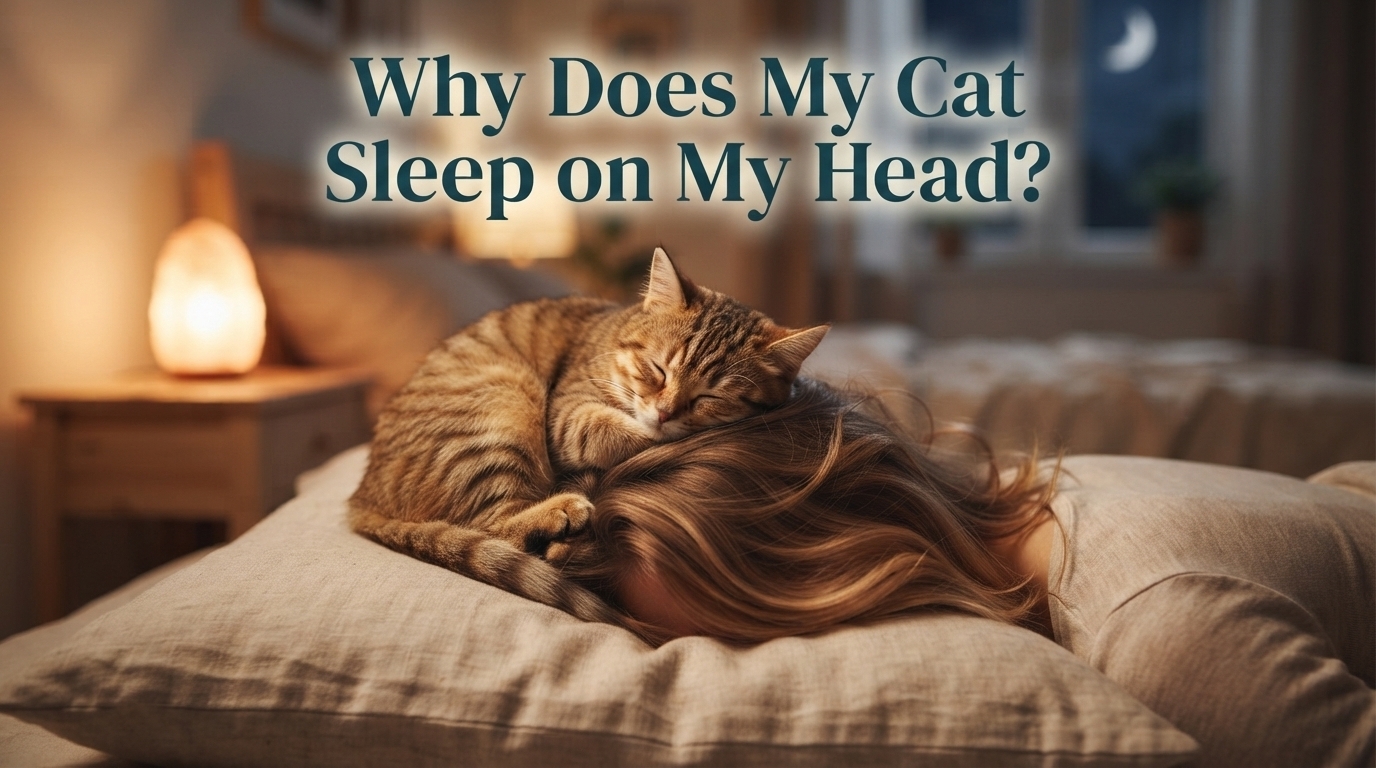

If your cat ignores its cozy bed and sleeps on your head instead, you may wonder what makes this unusual spot so attractive. Cats often choose the head and pillow because they are warm, comfortable, and carry their owner’s familiar scent. Your head also moves less than your arms and legs during sleep, giving your cat a calmer place to rest.
So, why does my cat sleep on my head? In most cases, this behavior shows comfort, trust, and a desire to stay close to you. However, warmth, habit, safety, and even the location of your pillow can also affect where your cat chooses to sleep.
Why Your Head Becomes the Best Seat in the House
Your cat has many places to sleep, yet your head may offer several benefits in one small area. It is warm, familiar, raised above the mattress, and close to someone your cat trusts.
Cats normally sleep for around 12 to 18 hours each day, and many change sleeping places depending on temperature, noise, light, and activity in the home. Cats Protection
Choosing your head is usually normal. The exact reason can differ between cats, so pay attention to what happens before your cat settles down.
Your Head Gives Off Steady Warmth
Cats naturally search for warm sleeping places. That is why you may find your cat beside a radiator, inside a sunny window, on clean laundry, or under a blanket.
Your head and face usually remain outside the covers while the rest of your body is hidden. This makes your head an easy source of warmth during the night.
You may notice the behavior more often:
- During cold weather
- In a cool or air-conditioned bedroom
- After you replace a thick blanket with a lighter one
- When your cat’s usual warm sleeping place is unavailable
International Cat Care explains that cats prefer warm sleeping areas and often choose places with familiar smells. International Cat Care
If your cat only sleeps beside your head during winter, warmth may be the main reason.
Your Scent Makes the Pillow Feel Safe
Your pillow carries a strong and familiar scent because your hair and skin touch it for several hours every night. To your cat, this smell may mean home, safety, and comfort.
Smell plays a major role in how cats understand their surroundings. Cats also have scent glands around their face. When your cat rubs its cheeks or forehead against you, it leaves some of its own scent behind.
Sleeping on your pillow may mix your familiar smell with your cat’s scent. This does not necessarily mean your cat is trying to control or “own” you. It is more likely part of feeling comfortable in a familiar social space.
Your Head Moves Less Than the Rest of You
Think about what your legs and arms do while you sleep. You may turn over, pull the blanket, stretch, or move without knowing it.
Your head normally remains in a smaller area. For a cat that does not want to be pushed, kicked, or rolled on, the top of the pillow may be the calmest place on the bed.
Cats Protection notes that cats may choose the head because it is one of the most still and accessible parts of a sleeping person. Cats Protection
A restless sleeper may therefore find the cat near the pillow, while a still sleeper may have a cat on the chest, stomach, or legs.
Your Cat Feels Safe Beside You
Sleep puts an animal in a less alert position. Cats often choose resting places where they feel protected and can respond quickly if something changes.
If your cat sleeps close to your face, it probably feels safe enough to relax beside you. Your presence, smell, breathing, and normal nighttime sounds may all be familiar.
This does not mean every cat will sleep on its owner. Some affectionate cats prefer the end of the bed, a chair, or another room. Cats show trust in different ways.
Is Sleeping on Your Head a Sign of Love?
It can be a sign of affection and trust, but it is not the only possible explanation.
A cat that sleeps beside your face is choosing close physical contact during a quiet and vulnerable time. That choice can show that your cat feels comfortable around you.
Look at the full pattern of behavior. Affection is more likely if your cat also:
• Slowly blinks at you
• Rubs its face against you
• Follows you into different rooms
• Rests with a relaxed body
· Greets you with tail up.
• Gently kneads your blanket
• Purrs while settling beside you
Also a cat may choose your head as it is a warm and comfortable spot. Don’t think this is a universal behavior, that is not the case. This action of head rubbing in to you also may give the cat warmth, security, and affection all at the same time.
Why Is My Cat Chooses To Sleep On My Pillow Instead Of His Bed?
Your cat may prefer the pillow over what you bought. A cat bed may be to your taste but for your cat may be too open, cold, unstable, or foreign. Your pillow is soft, warm, raised and filled with familiar scents.
Think about the location of the cat bed. In the middle of a busy hallway it may not feel safe. On a cold floor may not be warm enough. Some cats may find a covered bed protected, for others it may feel trapped.
Place a cat bed out:
• Near your head or at the foot of the bed.
• Away from the action and foot traffic.
• In a cozy environment away from drafts.
• Slightly above floor level
• In the field of vision of your cat.
• At a site which your cat has chosen already.
• Add your favorite blanket or a tshirt that you’ve worn. The scent is very calming and it may make the new environment at ease.
• Do not expect your cat to jump at the chance of using the bed right away. Cats tend to take their time with new things.
Why Is My Cat Into My Pillow First?
Cats do an action of pressing their front paws into a soft surface which they do repeatedly. This also referred to as “making biscuits.
Kittens will work at their mother’s fur while nursing. In adulthood cats may still do it when they are at ease. Also they may do this to make a soft spot to rest in or to mark out a territory with scents from glands in their paws.
If your cat is working out their paws on your pillow before bed by your head, it may be very at home. Use a thick blanket as a barrier between the claws and your skin if kneading is painful.
Never correct a cat for kneading. Instead try to trim the claws of his own accord or put a folded up blanket in your cat’s favorite spot.
[INTERNAL LINK NEEDED: Why do cats work that out with their paws?
Why Does My Cat Purr Near My Head?
Purrs are a sign that a cat is usually at ease but also may see a cat which uses them when stressed out, afraid, in pain, or trying to sooth themselves.
Check out the full body language of your cat. A relaxed cat will have soft eyes, normal muscle tone, upright ears, and slow breathing. A worried or uncomfortable cat may seek to hide, will be very tense in its body, flatten its ears, stop eating, or do something out of character.
A cat which gravitates to you, uses your pillow for rubbing, closes its eyes, and purrs is probably at ease. A cat which all of a sudden becomes very clingy and purrs at the same time it shows signs of pain requires close watch.
[INTERNAL LINK NEEDED: Why do cats hum?
Is Your Cat A Protector While You Sleep?
Your cat at which point is probably out and about in a different way a trained guard dog would be. They may pay attention to sound and motion but sleeping on your head it is for comfort rather than protection.
Some cats prefer to sit in a spot that has a view of the room or of the entryway. This does give them security and awareness to what is going on around them.
It is true that we may take comfort in the fact that our cat is watching over us but do not give the behavior great import. Warmth, smell, safety, and routine present more likely reasons.
Why Has My Cat Suddenly Started Sleeping on My Head?
A new sleeping habit can begin after a simple change in the home.
Common reasons include:
- Colder weather
- A new pet or visitor
- Building work or loud sounds
- Moving furniture
- A missing family member
- A change in your work schedule
- A new bed or blanket
- Loss of access to a favorite sleeping place
Your cat may move closer because you feel familiar while the rest of the home feels different.
A sudden increase in clinginess can sometimes happen when a cat is stressed or unwell. VCA Animal Hospitals advises treating sudden behavior changes as a possible reason for veterinary attention, especially when they appear with changes in appetite, energy, grooming, breathing, or litter-box use. VCA Animal Hospitals
Call your veterinarian if the new behavior comes with:
- Eating or drinking less
- Hiding more than usual
- Vomiting or diarrhea
- Trouble breathing
- Weight loss
- Poor grooming
- Litter-box changes
- Pain when touched
- Unusual crying or restlessness
Sleeping near you alone is not a clear sign of illness. Look for a wider change in your cat’s normal behavior.
Is It Safe to Let a Cat Sleep Near Your Face?
Yes, it is safe if your cat sleeps near your face. For most healthy adults, allowing a healthy, well-cared-for cat on the bed is generally low risk. Still, it may not suit every person or household.
Keep your cat’s flea and worm prevention current, wash your bedding regularly, and keep the litter box clean. Do not allow a cat with fleas, ringworm, diarrhea, or another possible infection to sleep beside your face until a veterinarian has treated the problem.
You may want to keep your cat away from your pillow if you have:
- Cat allergies
- Asthma made worse by animal dander
- Breathing difficulties
- A weakened immune system
- Very light or easily disturbed sleep
Cat allergies are caused by proteins found in a cat’s saliva and skin oils. These proteins spread onto the fur during grooming and then move into bedding and other parts of the home. Cats Protection
Never Let a Cat Sleep Beside a Baby’s Face
Cats should not have access to a sleeping baby’s cot, bassinet, or face. A baby cannot easily move away if a cat blocks the nose or mouth.
The ASPCA recommends keeping cribs and other infant sleeping areas off-limits to cats. ASPCA
Close the nursery door or use another secure method that keeps the cat completely out of the baby’s sleeping space.
What If Your Cat Keeps Waking You Up?
A cat sleeping quietly on the pillow may not bother you. The problem begins when it walks across your face, pulls your hair, bites your ears, or wakes you for breakfast.
Cats are often more active around dawn and dusk. This pattern is called crepuscular behavior. Early-morning activity is normal, but you can guide your cat toward a routine that causes fewer sleep problems. VCA Animal Hospitals
Try this evening routine:
- Schedule active play before bed. Use a fishing-rod toy or another safe toy for about 10 to 15 minutes.
- Offer the final meal after play. A play-and-meal routine may help your cat settle.
- Provide quiet nighttime activities. Puzzle feeders and safe toys can help an active indoor cat.
- Use an automatic feeder if breakfast is the problem. Set it to open before the usual wake-up time so the food does not come directly from you.
- Do not reward repeated waking. Talking, petting, feeding, or getting out of bed can teach the cat that waking you works.
- Keep the routine consistent. Changing the rule every night makes it harder for the cat to understand.
If your cat suddenly becomes very active or vocal at night, especially if it is older, ask your veterinarian to rule out pain or illness.
How to Stop Your Cat From Sleeping on Your Head
You can redirect this habit without harming your bond.
Offer a Better Sleeping Place
Place a soft cat bed or folded blanket next to your pillow. Your cat still gets closeness without lying directly on your head.
A raised bed, stable shelf, or chair beside the bed may also work because many cats prefer sleeping above floor level.
Make the New Spot Warm
Use a warm blanket or a pet-safe heated bed that follows the manufacturer’s safety directions. Never use a hot-water bottle or heating pad that can burn your cat.
The alternative needs to be as attractive as your pillow. A cold bed across the room may not compete with your body heat.
Add a Familiar Smell
Place a worn shirt or familiar blanket in the new sleeping area. Avoid strong perfume or scented laundry products, as cats have a sensitive sense of smell.
Move the Cat Gently
If your cat climbs onto your head, calmly move it to the chosen bed or blanket. Give quiet praise or a small treat when it stays there.
Repeat the same response every time. Do not turn the move into a game.
Keep the Bedroom Off-Limits if Needed
If allergies, breathing problems, or serious sleep loss make bed-sharing unsuitable, keep the cat out of the bedroom.
Provide a comfortable sleeping area elsewhere with water, a clean litter tray, safe toys, and resting places. Expect a short adjustment period if the cat has slept with you for a long time.
Avoid opening the door in response to repeated scratching or meowing, as this can teach the cat to continue.
Your Cat May Simply Want to Be Close
If you are still asking, “Why does my cat sleep on my head?”, the most likely answer is simple: your head gives your cat warmth, a familiar scent, a steady surface, and closeness to someone it trusts.
You can allow the habit if both of you sleep comfortably and there is no health or safety concerns. If you need more space, offer a warm bed close to your pillow and redirect your cat gently. The sleeping place may change, but your bond does not have to.
Frequently Asked Questions
Why does my cat sleep above my head every night?
The top of your pillow is warm, soft, and less likely to move than your arms or legs. It also carries your familiar scent. If your cat returns every night, the place has probably become part of its normal routine.
Does my cat trust me if it sleeps by my face?
Close sleeping can show trust because a sleeping cat is less alert. However, warmth and comfort may also influence the choice. Look for other relaxed social behaviors, such as slow blinking, gentle rubbing, kneading, and a loose body.
Why does my cat sleep on my hair?
Your hair carries a strong scent and may feel warm and soft. Some cats may also enjoy the texture. Move the cat gently if it pulls, chews, or swallows hair, as eating hair can cause problems.
Why does my cat sleep on my head but not my partner’s?
Your scent, body temperature, sleeping position, or movement may make your side more attractive. Your cat may also have a stronger routine with you. This does not necessarily mean the cat dislikes your partner.
Why does my cat put its paw on my face while sleeping?
The paw may help your cat keep physical contact with you. It may also happen because the cat stretches or changes position. If the claws scratch your skin, place a folded blanket between you and the cat.
Why does my cat sleep on my pillow when I am not there?
The pillow remains soft and carries your scent even after you leave. It may help the cat feel secure while you are away.
Should I let my rescue cat sleep on my head?
You can allow it if you are comfortable and the cat is healthy. A rescue cat may seek closeness after settling into the home, but every cat is different. Also provide private beds and hiding places so the cat can choose between contact and quiet time.