
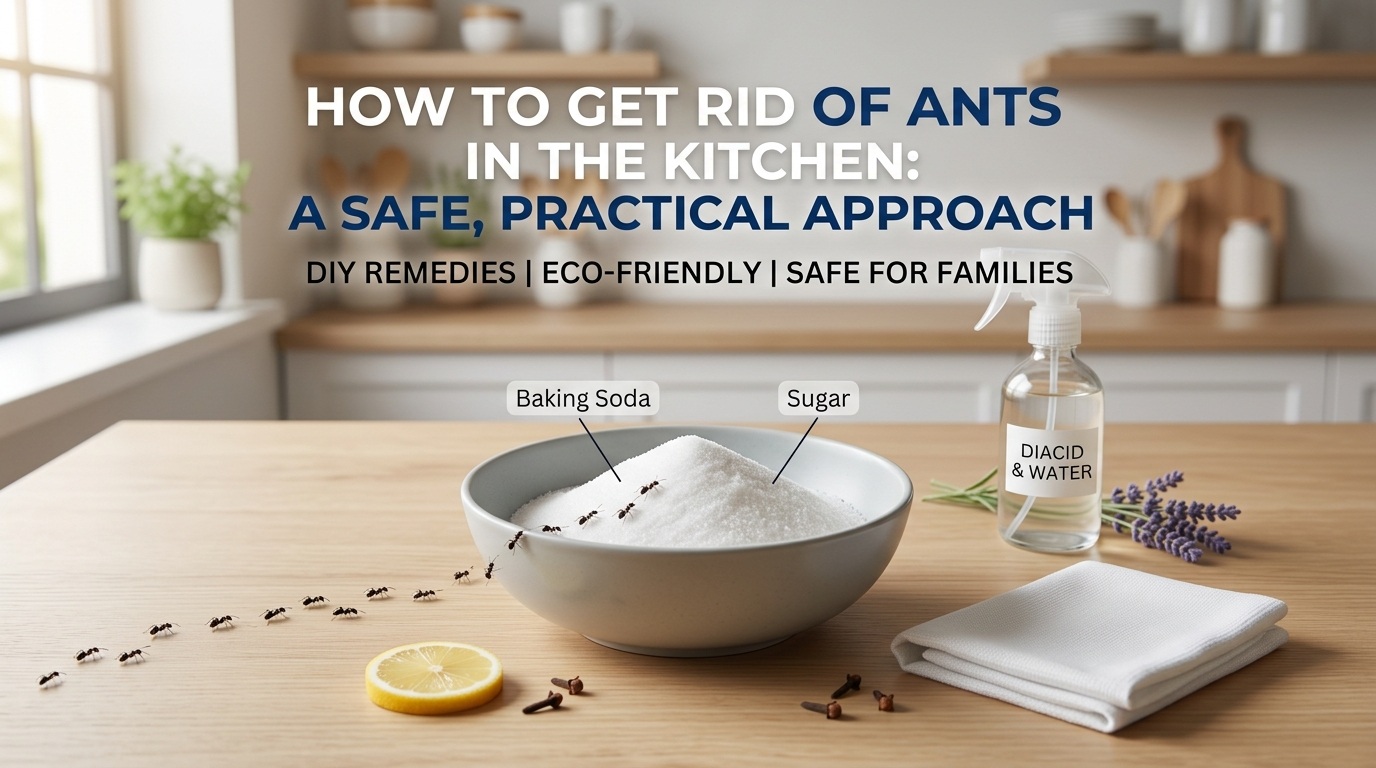

By Flora Aldrich
One morning, I strolled into my kitchen and discovered ants everyplace. I was astonished because nothing seemed weird the night prior. They appeared unexpectedly on the worktops, cabinets, and food preparation areas. Rather of spraying anything I might find, my sister Carolyn assisted me in working thru the difficulty. That event showed me that understanding how to get rid of ants in the kitchen entails more than simply killing visible ants. You must eliminate what attracts them, determine where they are moving, select the appropriate control strategy, and make it more difficult for them to access the kitchen again. These are the realistic steps I would take if I had the identical problem today.
The quickest approach is to remove accessible food and water, identify the ants’ trail, clean up visible ants, and use appropriate registered ant bait if the problem continues. Baits can reach the colony because worker ants carry them back to the nest, while killing individual ants usually provides only temporary relief. University of Minnesota Extension
Why Did Ants Suddenly Appear in My Kitchen?
Finding dozens of ants when you saw none the previous day can make it feel as though an infestation appeared overnight. Usually, the colony was already nearby.
Worker ants leave the nest to search for resources. Different species may look for sweets, fats, proteins, or other foods, and kitchens also provide water. Once ants establish a regular route to a useful food source, they can repeatedly travel along that path. University of Minnesota Extension
Ant activity indoors may also increase when outdoor conditions become unfavorable. EPA educational material notes that small ants may enter buildings looking for food or moisture or to escape conditions such as rain, drought, heat, or cold. US EPA
So the sudden arrival does not necessarily mean your kitchen is dirty. Even a clean kitchen can offer ants a few crumbs, a sticky drop under an appliance, pet food, condensation, or water around the sink.
First, Find Out Where the Ants Are Going
Before wiping out every ant you see, spend a few minutes watching them.
Ants commonly follow regular routes between food and their nest. University of Minnesota Extension recommends observing their movement because following the trail can sometimes reveal where the colony or entry point is located. University of Minnesota Extension
Check:
· Around the kitchen sink and plumbing penetrations
· Along countertop edges and backsplashes
· Under the refrigerator and stove
· Inside lower cabinets
· Around windows and exterior doors
· Along baseboards
· Near pet bowls
· Around trash and recycling containers
· Behind dishwashers
Finding the route matters because an ant wandering across the counter is only part of the problem. You want to know how ants are getting in and, when possible, where they are returning.
How to Get Rid of Ants in Your Kitchen Fast
There are really two meanings of “fast.”
You can remove the ants you see almost immediately, but eliminating the colony usually takes longer. Baits are deliberately slow acting because workers need time to carry the bait back and share it within the colony. Canada
For a lasting result, follow these steps.
Step 1: Remove Their Easy Food Sources
Start with the foods ants can reach rather than reaching immediately for insecticide.
Wipe crumbs and spills from counters, sweep or vacuum around cabinets and appliances, wash dirty dishes, empty food waste, and close packages properly. EPA guidance recommends storing opened foods in sealed containers, cleaning spills promptly, washing dishes, and keeping trash covered. US EPA
Pay particular attention to:
· Sugar, honey, syrup, and jam
· Crumbs inside toaster areas
· Fruit that is becoming overripe
· Grease and food residue around the stove
· Open cereal or baking ingredients
· Pet food
· Recycling containers that still contain sweet drink residue
Store vulnerable foods in tightly closed containers rather than assuming a folded paper or cardboard package will keep insects out.
Step 2: Remove Unnecessary Water Sources
Ants may be coming into the kitchen for water as well as food.
Dry the sink and surrounding counter, repair dripping faucets, and check under the sink, dishwasher, and refrigerator for leaks or condensation. NPIC also recommends repairing leaking pipes and other moisture problems as part of household ant prevention. National Pesticide Information Center
Do not overlook damp sponges, wet cleaning cloths, pet water areas, or a slow plumbing leak hidden inside a cabinet.
Step 3: Remove the Ants You Can See
For immediate cleanup, vacuum visible ants or wipe them away.
NPIC recommends vacuuming ants and wiping ant trails with soapy water. Ants use chemical trails to navigate, so cleaning surfaces can help remove the route they have been following. National Pesticide Information Center
If you plan to put bait directly along an active trail, however, do not repeatedly spray strong cleaners or insecticides around the bait itself. Contaminating a bait or disrupting the ants before they carry it away can reduce its usefulness. University of Minnesota Extension
In food-preparation areas, cleanliness takes priority. Clean surfaces where food is prepared and place any pesticide product only where its label specifically permits.
Step 4: Use Ant Bait for an Established Trail
If ants keep returning, bait is often more useful than killing individual workers.
Worker ants feed on bait and carry it back to the colony. University of Minnesota Extension describes bait as the best way to treat many indoor ant nests because it can reach areas sprays cannot. University of Minnesota Extension
Place a registered, ready-to-use ant bait where ants are actively traveling, while following the product’s exact label directions.
Do not expect instant disappearance. Health Canada recommends keeping appropriate bait available for at least two weeks in some situations, and university guidance notes that colony elimination can take considerably longer depending on the ant and infestation. Canada
You may even notice more ants around the bait initially. That can simply mean workers have found the food source and are recruiting other ants to it.
Step 5: Do Not Spray Around the Bait
This is a common mistake.
You see ants gathering around bait, become worried that the problem is getting worse, and spray the entire area. But insecticide sprays can kill workers before they return to the colony and can make bait less attractive or contaminate it. University of Minnesota Extension specifically advises against spraying insecticide while using bait. University of Minnesota Extension
If you choose baiting, give the process time to work according to its label.
Step 6: Seal the Entry Points After Activity Drops
Once you have controlled the active problem, turn your attention to prevention.
Caulk gaps around plumbing, windows, door frames, backsplashes, baseboards, and other places ants may use to enter. EPA guidance recommends sealing cracks and openings around sinks, pipes, baseboards, and windows to reduce pest entry. US EPA
Repair damaged window screens and check exterior gaps around utility lines.
Sealing is especially important because killing one group of ants will not stop another colony from finding the same easy route later.
Best DIY Ant Baits for Kitchen Infestations
If by “DIY” you mean something you can use yourself without hiring an exterminator, I prefer commercial ready-to-use bait stations or properly labeled gel baits over homemade pesticide recipes.
Different ant species may prefer different foods, and their preferences can even change. If one registered bait is completely ignored, another formulation labeled for the ant and location may work better. University of Minnesota Extension
Enclosed Bait Stations
For many households, enclosed bait stations are the easiest option because the pesticide is contained inside a housing rather than being spread openly across the kitchen.
They are still pesticides and must be kept where children and pets cannot access them. NPIC recommends putting ant baits in locked bait stations or otherwise safely out of children’s reach. National Pesticide Information Center
Health Canada similarly advises placing bait stations in the ants’ path while keeping them inaccessible to children and pets. (Canada)
Gel Baits
Gel baits can sometimes be useful in cracks, crevices, or other locations listed on their labels.
Do not apply a gel simply because ants are nearby. The label must permit indoor use and the specific location where you plan to apply it.
In a kitchen, never put pesticides directly on dishes, utensils, uncovered food, or food-preparation surfaces unless the product label explicitly allows that use.
Should You Make Borax and Sugar Ant Bait at Home?
You will find many internet recipes combining borax or boric acid with sugar and water. I would not make a homemade pesticide mixture for a kitchen, particularly in a household with children or pets.
Boric acid and borax are insecticides when used to control insects, and exposure can occur thru ingestion, skin or eye contact, or inhalation, depending on the formulation. National Pesticide Information Center
Health Canada, making DIY pesticides poses risks to people, pets, and the environment.
In, registered products include concentration information, application instructions, safety concerns, and labeled usage. A homemade lid with sweet juice and insecticide does not offer those safeguards.
What About Vinegar, Cinnamon, Peppermint, or Baking Soda?
These solutions occur in numerous housekeeping suggestions, but repelling a few ants is not the same as eradicating the entire colony.
According to the University of Minnesota Extension, cinnamon, herbs, orange peels, lavender, and essential oils are not effective strategies for removing an ant colony. University of Minnesota Extension
Soapy water is still effective for cleansing ant trails, and sanitation is important. However, if ants return from an established colony on a regular basis, employ proven control methods rather than scattering strong-smelling household components about the kitchen.
Is Diatomaceous Earth Safe for Kitchen Ants?
According to Health Canada, diatomaceous earth is a non-chemical ant control solution that can be used in cracks and crevices. It operates physically by destroying the insects’ exterior surface and is still effective when dry. Canada
Do not inhale the dust. Avoid spreading loose powder on countertops, floors where children or pets play, or food preparation areas.
If you use pest-control products, make sure they are labeled for the proper application and follow the guidelines.
How to Handle Ant Bait Around Children and Pets
This deserves extra attention because kitchens are shared spaces.
All pesticides have some level of toxicity, and NPIC recommends minimizing children’s exposure through methods such as integrated pest management, careful label use, and inaccessible bait placement. National Pesticide Information Center
If you have children:
· Choose enclosed stations where appropriate.
· Put bait somewhere they cannot touch or remove it.
· Store unused products in the original container.
· Never put pesticide into a food container.
· Follow all label instructions.
For pets, Health Canada advises removing pet food, bowls, bedding, and toys from areas being treated and keeping pesticide baits where pets cannot reach them. Canada
Remember that a sweet bait designed to attract ants may also smell interesting to a curious pet.
Are Ants in the Kitchen a Food-Safety Problem?
Ants around food should be addressed promptly. Some household species can contaminate stored food, and University of Minnesota Extension notes that certain species can infest foods. University of Minnesota Extension
Discard food if ants have gotten directly into an open package and you cannot clean or protect it properly.
Clean countertops, cutting boards, utensils, and other food-contact areas using the cleaning method appropriate for the surface. If a pesticide has accidentally contaminated a food-contact area, follow the product label rather than guessing how to clean it.
What If the Ants Are Large and Black?
Large ants deserve closer attention because they may be carpenter ants.
Carpenter ants do not eat wood, but they excavate galleries in moisture-damaged or softened wood to create nesting areas. They may be found around sinks, tubs, dishwashers, wall voids, roofing, and other damp structural areas. University of Minnesota Extension
Signs that deserve professional inspection include:
Large ants repeatedly appearing indoors
Sawdust-like material near wood
Ant activity associated with damp or damaged timber
Winged ants emerging inside the house
A suspected nest inside a wall
University of Minnesota Extension notes that carpenter-ant control often requires professional pest-management services. University of Minnesota Extension
What If You’re Renting?
Renters can still handle ordinary cleaning and food storage, but avoid opening walls, applying products contrary to your lease, or making structural changes without permission.
Document recurring ant activity with photos and report leaks, damaged seals, cracks, or suspected structural nests to your landlord or property manager.
If ants are entering through a building-wide plumbing chase, neighboring unit, damaged wall, or structural problem, cleaning your countertop alone will not address the cause.
How to Keep Ants From Coming Back
Once the kitchen gets rid of ants, prevention becomes easier than dealing with another complete trail.
Make the following practices part of your normal kitchen cleaning routine:
1. Store sugar, cereal, flour, pet food, and other comparable items in sealed containers.
2. Clean up spills as they happen.
3. Rinse the food residue from recycling.
4. If at all possible, avoid leaving soiled dishes overnight.
5. Empty the trash on a regular basis.
6. Clean under appliances on occasion.
7. Repair plumbing leaks.
8. Keep pet food locations clean.
9. Close any entry gaps.
10. Trim any vegetation that touches the exterior of the house.
These steps are consistent with integrated pest management, as they remove food, water, shelter, and entry points before relying primarily on insecticides. The EPA and the NPIC both suggest a prevention-first approach. US EPA
[INTERNAL LINK NEEDED: kitchen deep cleaning checklist]
When Should You Call a Pest-Control Professional?
When ants persist despite proper hygiene and bait, when you are unable to identify the species, or when the suspected nest is inaccessible, you should think about getting professional assistance.
Professional evaluation makes the most sense if:
1. The infestation keeps coming back.
2. Ants are showing up in a number of rooms.
3. You think they might be carpenter ants.
4. Ants with wings are starting to appear indoors.
5. The colony seems to reside inside a structural void or wall.
6. DIY baits are frequently disregarded.
7. Treatments cannot be administered in a safe manner around pets or children.
Based on the ant’s nesting habits and dietary preferences, pest management experts can identify it and choose a treatment. University of Minnesota Extension
Frequently Asked Questions
What is the quickest way to get rid of ants on a kitchen counter?
Wipe up or vacuum the visible ants, then clear any food remains from the counter. Then find the route they took. If they continue to return, an adequately labeled ant bait can destroy the entire colony rather than just the workers you observe.
Why are there ants in my kitchen when there is no food present?
Ants may be hunting for crumbs or residue that you can’t see, or they could be looking for water. They can also enter buildings as the weather changes. Check below appliances, recyclables, plumbing, pet areas, leaks, and condensation before focusing solely on food left on the counter.
Should I kill the ants eating the bait?
Usually, no. The goal of slow-acting bait is for worker ants to transport it back to the colony. Spraying or killing all the workers near the bait can disrupt the process. Follow the bait label and give it enough time to work.
Why aren’t the ants taking my bait?
Different species and colonies may prefer sweets, fats, proteins, or other meals at different periods. A bait that works for one type of ant may not be effective for another. Confirm if the product is labeled for domestic ants, and if not, look into another registered bait composition.
Is ant bait safe for pets?
Ant baits are still considered pesticide goods. Keep them away from pets and follow the label directions. Health Canada cautions that pesticide baits frequently contain food items that animals may find appealing.
Should I cover the breach if I see ants coming thru?
You can eventually plug entry points, but first make sure you’ve dealt with any ants that are already inside and have an active colony-control plan. Once activity has subsided, fixing cracks around pipes, windows, doors, and baseboards can help prevent repeat intrusions.
Win the Colony Battle, Not Just the Countertop Battle
What I learned from my personal kitchen experience is that swatting ants one at a time never answers the larger question: why are they there?
If you want to know how to get rid of ants in the kitchen, start by eliminating food and water, then monitor where the ants go, use a properly labeled bait as necessary, and seal their access ways once the active problem has been resolved. Pesticides should be kept away from food, children, and pets, and homemade mixtures should not be assumed to be safer simply because the ingredients sound familiar.
The practical first step tonight is to clean and dry the kitchen, then spends a few minutes monitoring for any leftover ants. That trail may tell you far more than another can of spray.