

Submitted by Dr. Emily, Early Childhood Development Specialist
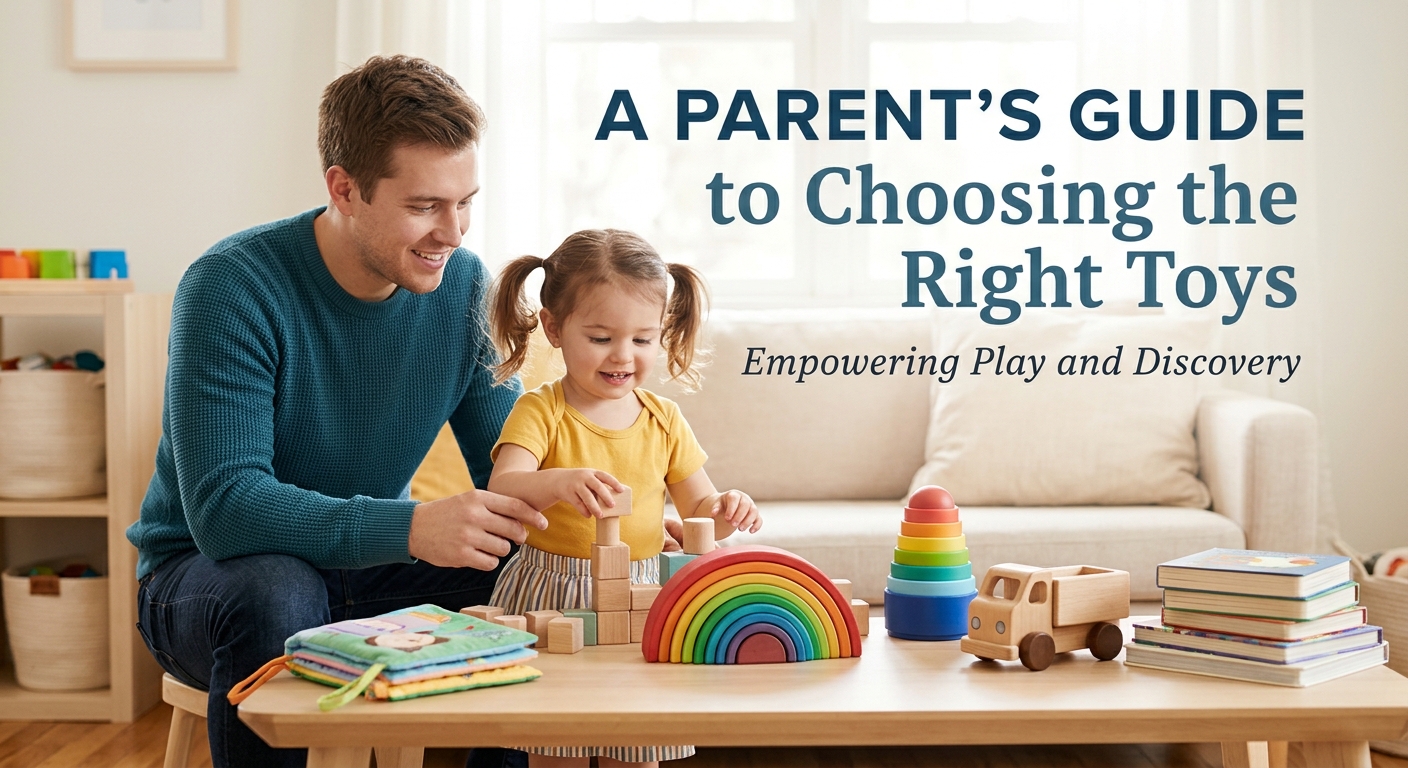
I’m Dr. Emily, an early baby development specialist, and I often see parents feeling overwhelmed by shelves full of bright, noisy toys. When a baby reaches for objects, a toddler begins stacking blocks, or a child plays with a simple wooden toy for ten minutes, many parents wonder, “Is this genuinely helping my child learn?” Many people believe that having more toys means learning more, yet young children often benefit from basic, purposeful play. In this article, I’ll go over how development in the first three years of life may be aided by age-appropriate Montessori toys and how parents may choose toys that encourage independence, curiosity, problem-solving abilities, and confidence without adding unnecessary clutter. Children may explore, repeat, and learn at their own speed with Montessori toys. For babies and toddlers ages 0 to 3, simple, safe, hands-on toys that teach skills like clutching, movement, coordination, language, and autonomous play are often the best options.
What Are Montessori Toys and Why Do They Matter?
Playthings influenced by Dr. Maria Montessori’s Montessori education system are known as Montessori toys. The concept places a strong emphasis on giving kids the opportunity to learn through practical experiences, independence, and exploration.
Unlike many modern electronic toys that entertain kids with lights, sounds, and automated activities, Montessori-inspired toys typically encourage active participation.
A toddler is not taught what to do by a simple wooden puzzle, stacking toy, or shape sorter.
Rather, it allows them to try:
1. How does this item fit?
2. How can I get the bricks to balance?
3. What would happen if I dropped this item?
4. How can I perform this motion again?
Children benefit from this type of play in terms of concentration, coordination, confidence, and problem-solving abilities. But it’s important to remember that a toy does not make a child “smarter.” A child’s development is influenced by play, relationships, communication, activity, nutrition, and a secure environment.
Which Montessori toys are best for a newborn?
Although babies learn mostly through their senses and interactions with caregivers, many parents assume that kids immediately demand colorful toys.
The best Montessori-inspired toys for the first few months are frequently simple items that encourage gripping, visual tracking, and sensory exploration.
Newborn Montessori Toys (0 to 3 months)
Newborns develop during this period:
• Vision.
• Hand gestures.
• A greater awareness of hearing.
• Control over one’s body
• Exhibits early communication skills.
Appropriate options consist of:
High-contrast Baby Mobiles
Because newborn eyesight is still developing, basic black-and-white patterns may be more noticeable to small newborns.
A Montessori-style mobile is often hung securely above the baby’s mobility area, allowing them to study forms and movement.
Soft Sensory Balls
A lightweight cloth ball with a variety of textures can promote early touching and grabbing.
Wooden Rattles.
A basic wooden rattle might include:
• Cause and effect.
• Sound exploration.
• Demonstrates hand control.
Always select toys that are appropriate for the child’s age and do not include little removable pieces.
Cloth Books
Even before newborns can understand words, looking at images and hearing their parents’ voices promotes early language development.
When Should I Start Using Montessori Toys With My Baby?
Montessori-inspired toys can be introduced as early as birth, but the types of toys should change as your child grows.
The important factor is not just age. Assess your child’s ability.
For example:
• A newborn may detect a mobile.
• Six-month-olds can reach and hold objects.
• One-year-olds can practice stacking and sorting.
• A two-year-old can solve basic puzzles and do practical tasks.
Children develop at different rates, so do not compare your child’s progress to another’s.
Montessori Toys by Age: 0-3 Years Development Guide
Choosing toys based on developmental stages makes play more meaningful.
Montessori Toys for Babies (3–6 months)
Between the ages of three and six months, many newborns develop an interest in gripping, holding, and investigating items.
Good choices include:
Grasping Toys
Simple wooden rings or easy-to-hold toys allow newborns to practice:
• Hand strength
• Coordination.
• Improved talents.
Textured toys encourage safe exploration through touch.
Examples:
• Fabric balls.
• Silicone teethers
• Textured wooden toys.
Mirror Toys
Babies are frequently captivated by reflections.
A baby-safe mirror promotes:
• Visual exploration.
• Improves facial awareness.
• Observe movements.
Montessori Toys for Babies (6–12 Months)
This stage brings major changes. Babies often begin sitting, crawling, transferring objects between hands, and exploring their environment.
Object Permanence Toys
Object permanence means understanding that something still exists even when it disappears from sight.
Examples:
• Object permanence boxes
• Simple hiding games
• Ball drop toys
These activities encourage problem-solving and memory.
Stacking Cups
Stacking cups are simple but powerful.
They support:
• Hand-eye coordination
• Size comparison
• Early problem-solving
A baby may first knock them down before learning to stack them. That repetition is part of learning.
Push and Pull Toys
Once babies begin moving around, push and pull toys can encourage:
• Balance
• Walking practice
• Movement confidence
Montessori Toys for Toddlers (1–2 Years)
Toddlers are becoming more independent. They want to touch, move, imitate adults, and complete tasks themselves.
This is also the age when many parents experience challenging behaviors, including toddler tantrums.
Tantrums often happen because toddlers have big emotions but limited communication skills. Independent play activities can sometimes help children practice focus and control.
Wooden Puzzles
Simple puzzles support:
• Problem-solving
• Fine motor skills
• Shape recognition
Start with puzzles containing fewer pieces and larger handles.
Shape Sorters
Shape sorters help toddlers learn:
• Matching
• Spatial awareness
• Concentration
Practical Life Toys
Montessori education places strong value on everyday skills.
Examples include:
• Child-sized cleaning tools
• Pouring activities
• Simple kitchen tools
• Dressing frames
These activities allow children to feel capable and involved.
Montessori Toys for Toddlers (2–3 Years)
Between ages two and three, children often develop stronger language skills, imagination, and independence.
The best toys challenge them without causing frustration.
Building Blocks
Blocks encourage:
• Creativity
• Planning
• Balance
• Early math concepts
Matching and Sorting Games
Examples:
• Color sorting
• Animal matching
• Counting activities
These support early cognitive development.
Pretend Play Materials
Montessori classrooms often include realistic pretend-play materials.
Examples:
• Wooden kitchen tools
• Doll care materials
• Gardening tools
Realistic toys help children understand the world around them.
Are Montessori Toys Worth the Money?
This is one of the most common questions parents ask.
The answer depends on what you buy.
A Montessori toy does not need to be expensive, handmade, or made from premium wood to be valuable.
The most important qualities are:
1. Does it promote active play?
An excellent toy encourages a child to make decisions.
For example:
A stacking toy helps children to experiment. A device that only plays music after pressing a single button may restrict exploration.
2. Is it suitable for their development?
A toy that is highly advanced may create annoyance.
A toy that is extremely simplistic may quickly become dull.
Choose materials that are a little challenging but manageable.
3. Will your child actually use it?
A gorgeous wooden toy is meaningless if your kid disregards it.
Observe what your child naturally enjoys.
Some children enjoy puzzles. Others enjoy dance, literature, and sensory play.
How many Montessori toys should a child own?
Many parents believe that more toys equal more learning opportunities, but too many alternatives can make it difficult for children to focus.
A basic toy rotating mechanism may be beneficial.
Instead of having all the toys available:
1. Put some toys away.
2. Make a limited selection easily accessible.
3. Rotate the toys every few weeks.
4. Pay attention to what your youngster enjoys doing.
This also helps parents create more calm surroundings.
Many families prefer Montessori-inspired nursery concepts, which include:
• The shelves are low.
• Books that are suitable for youngsters.
• Simple toy baskets.
• Provide an open floor plan for mobility.
The goal is not to create a perfect-looking area. The objective is to provide an environment in which children can safely explore.
Montessori Toys and Sleep: Is There a Connection?
Parents may explore for Montessori concepts while also attempting to understand routines such as how newborns sleep through the nite or how to create more successful daily schedules.
Montessori toys do not automatically encourage babies to sleep longer. Predictable routines and peaceful environments, on the other hand, can help people form excellent habits.
A constant daily rhythm may include:
• Active play during the waking hours.
• Do some quiet activities before bedtime.
• Create a soothing nighttime ritual.
Understanding your baby’s requirements, especially age-appropriate waking periods, may help you organize play and rest intervals.
[INTERNAL LINK NEEDED: wake windows by age]
Are Montessori toys safe for babies?
Safety should always come before educational value.
Before introducing any toy to a child:
• Determine the suitable age range.
• Avoid toys that have small, detachable parts.
• Inspect toys regularly for damage.
• Choose nontoxic items from trusted manufacturers.
• Monitor babies throughout playtime.
The American Academy of Pediatrics recommends that children’s toys be age and developmental appropriate, as well as low in choking hazards. healthychildren.org
Montessori Toys Versus Regular Toys: Which Is Better?
There is no definite rule stating that Montessori toys are always superior.
A young child can learn through a variety of play activities.
The distinction is typically in the design approach.
| Montessori-Inspired Toys | Many Traditional Toys |
| Encourage active participation | May focus on entertainment |
| Often have simple designs | Often include lights or sounds |
| Support repetition and practice | May provide quick stimulation |
| Allow children to explore | May direct the child’s actions |
The best toy is one that matches your child’s interests, abilities, and safety needs.
Frequently Asked Questions
Are Montessori toys only made from wood?
No. Montessori toys are often made from natural materials like wood, but the material itself is not what makes a toy Montessori-inspired. The important part is how the toy encourages exploration, independence, and active learning.
Can I use Montessori toys with my newborn?
Yes. Newborns can benefit from simple Montessori-inspired items such as high-contrast mobiles, soft sensory toys, and safe rattles. The secret is to choose objects that are appropriate for their developmental level and monitor their use.
Do Montessori toys help children learn faster?
Montessori toys do not accelerate learning. They offer children the opportunity to learn skills via hands-on investigation. Relationships, communication, the environment, and individual developmental patterns all influence a child’s development.
Are expensive Montessori toys better?
Not necessarily. A simple, affordable item that encourages your child to think, move, and explore may be more valuable than a costly toy that they dislike.
Final Thoughts: Choosing Montessori Toys by Age
Choosing Montessori toys by age involves knowing your child’s learning style rather than purchasing a specific brand.
Emphasize sensory exploration and mobility in neonates. Toys for toddlers should encourage independence, problem solving, creativity, and practical skills.
The best toy is not always the newest or most expensive. It is the one that enables your child to experiment, make mistakes, and learn on their own.
Begin with a few deliberate choices, then research your child’s interests and design a play environment that grows alongside them.