
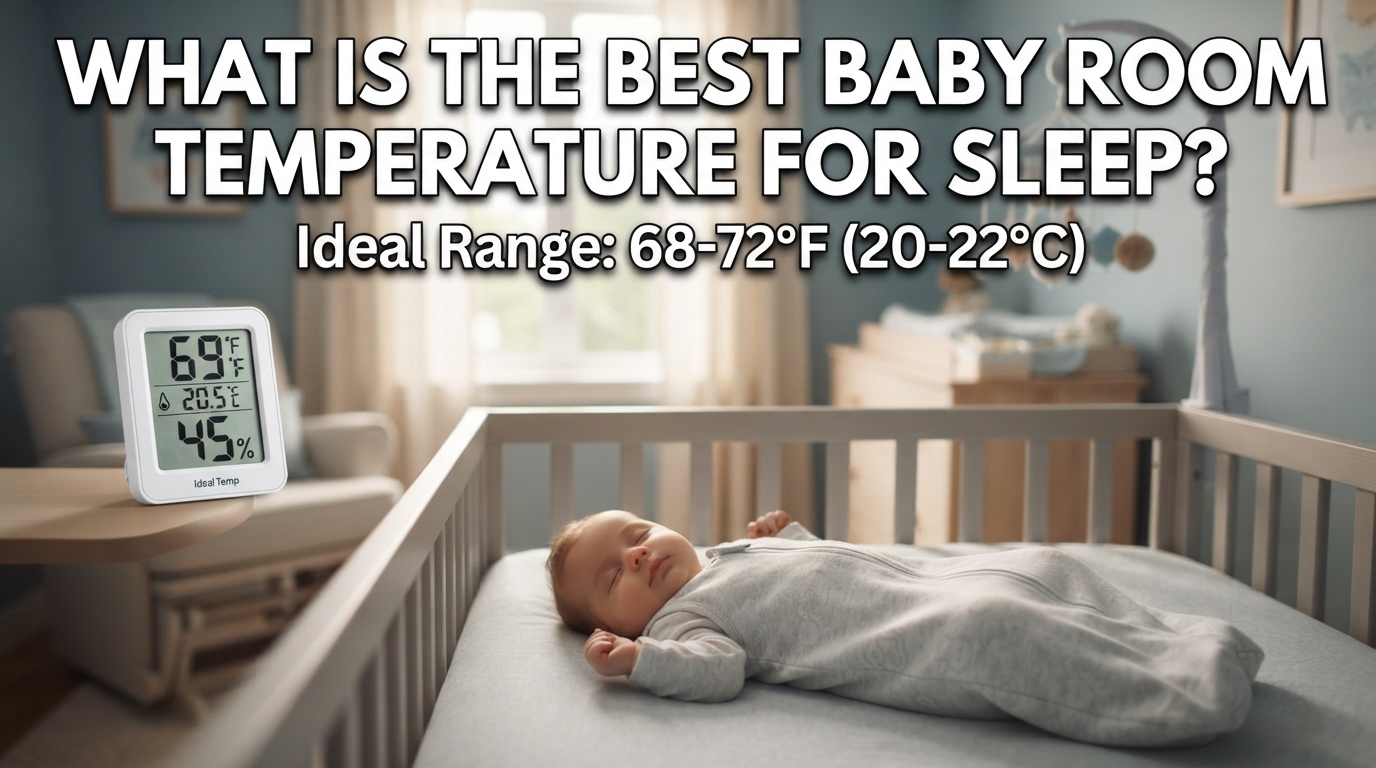

In the nursery the temp reads 72°F, also your baby’s hands are cool. What was a routine bedtime has turned into a series of worried questions. Should you turn up the heat, remove a layer or do nothing at all? What is a proper baby room temp doesn’t solely depend on what the thermostat says. Your baby’s clothing, bedding, health and signs of overheating also play a role.
UK safer sleep guidance says that a baby’s room should be between 16°C and 20°C which is the same as 61°F to 68°F. In the US and Canada they base their guidance more on what is a comfortable room temp for a lightly dressed adult and also to make sure the baby does not overheat or sweat.
In terms of temperature which is best for a baby’s sleep it is cool and comfortable rather than warm. In the UK we see a recommended range of 16-20°C. In the U.S. and Canada health authorities stress appropriate dressing for comfort and to check the baby’s chest or neck for signs of overheating.
Why Baby Room Temperature Matters
Babies should have a comfortable warm setting but are not meant to be hot. Also they do not regulate their body temperature like adults and are at the mercy of their environment and what they are wearing.
Over sudden infant death syndrome, also known as SIDS is known issues of babies overheat. The American Academy of Pediatrics reports that signs of which parents should be alert include sweating, red skin, or a hot chest. Also they put forth that it is unnecessary to dress a baby in more than a single layer of clothing as what is put on an adult in the same room. American Academy of Pediatrics safe-sleep guidance
Temperature is one element of safe sleep. Also see that the baby sleeps on their back on a firm flat surface free of pillows, toys, bumpers and loose bedding.
Recommended Baby Room Temperature by Country
Parents also report mixed information which is put forth by health organizations that do not present a single thermostat setting.
In United Kingdom, recommended temperature is 16–20°C, or approximately 61–68°F
United States Keep baby comfortable and free of overheat; no one reports from the AAP on this issue.
Canada for a room to be suitable for an adult it should also accommodate a properly dressed baby.
The UK’s Lullaby Trust reports that room temperature for babies should be between 16-20°C with light bedding or a lightweight well fitted baby sleep bag. Also this is a guide which is used as a reference and parents should check their baby’s temperature often. Lullaby Trust on room temperature for babies’ sleep.
Health Canada does not provide a strict range. Instead they suggest a comfortable room setting and wearing lose sleepwear that is not too warm. Health Canada sleepwear advice.
Keep baby at a comfortable temperature which doesn’t require heavy clothing or lots of bedding.
Is it too hot at 72 degrees in a baby’s room?
A temperature of 72°F, also around 22°C, may not be considered dangerous in itself but is on the high side of the 16 to 20°C which the UK safer sleep guide recommends. At 72°F use light sleep wear, do not add extra blankets, and check the baby’s chest or the back of their neck for signs of warmth or sweating.
When it comes to changing the thermostat consider these four points:
At 72°F a cotton sleeper will do for the baby. In the same room thicker layers would be too much.
1. Is your baby in a sleep sack? Check the manufacturer’s care labels.
2. A baby which is over heated may have a warm chest, wet hair, be sweating, or have hot skin.
3. Is it that the crib is getting too hot? Direct sun, a radiator, or closed in room may cause the sleep area to be warmer than the thermostat reads.
4. If you find the room is stuffy try to reduce the heat or improve air circulation. Also do not direct a strong fan at the baby.
How to tell if your baby is too hot or too cold?
The thermostat is a handy tool but your baby’s body gives the better indicator. Try feeling the chest, upper back, or the back of the neck.
Your baby may present signs of being over heated if you see:
• A hot or sweaty chest
• Damp hair
• Flushed skin
• A hot neck or back
• Unusual restlessness
• Rapid breathing for no apparent reason.
Remove one layer and check again after several minutes. If your baby appears unwell, has trouble breathing, is difficult to wake, or does not cool down, seek medical help.
Your baby may need another light layer if the chest or upper back feels cool. However, cool hands and feet do not necessarily mean that the baby is cold. Both the NHS and The Lullaby Trust advice checking the chest or back of the neck rather than relying on the hands and feet. NHS guidance on preventing overheating
Do not place a hot water bottle or electric blanket in a baby’s sleep space. The NHS also advises keeping babies away from radiators, heaters, fires, and direct sunlight. NHS guidance for dressing a newborn
What Should a Baby Wear to Sleep?
Choose simple, fitted sleepwear that suits the actual room temperature. A baby normally needs only one lighter layer than a comfortable adult would wear in the same environment.
Suitable options may include:
- A lightweight bodysuit
- A fitted one-piece sleeper
- A properly sized sleep sack
- A bodysuit under a sleeper in a cooler room
Avoid deciding by season alone. A nursery can remain warm during winter because of central heating or become cool during summer because of air conditioning.
Using a Sleep Sack
A sleep sack can replace loose blankets, but it must fit correctly around the shoulders, neck, and arms. The baby’s head should not be able to slip inside it.
Sleep sacks have different thicknesses, often described using a TOG rating. TOG measures thermal insulation, but clothing recommendations vary between brands. Follow the chart supplied with the specific product instead of applying one universal TOG chart to every sleep sack.
Do not combine a thick sleep sack with several heavy clothing layers. Check the baby’s chest or neck after settling them to sleep.
Health Canada advises choosing a sleep sack in the correct size so the baby cannot slip down inside it and has enough room to move their hips and legs. Health Canada safe-sleep information
Should Babies Wear Hats Indoors?
Babies should not normally wear hats while sleeping indoors after leaving the hospital. A covered head can make it harder for a baby to release excess heat.
The AAP and Health Canada advise against indoor hats during sleep because they may contribute to overheating. Keep the baby’s head and face uncovered.
How to Measure the Nursery Temperature Correctly
Use a basic room thermometer rather than relying only on the home thermostat. The thermostat may be in a hallway or another room that is warmer or cooler than the nursery.
Place the thermometer:
- Near the crib but outside the baby’s reach
- Away from direct sunlight
- Away from a radiator, heater, or vent
- At roughly the same height as the sleep surface
- Away from an open window
Do not place the thermometer inside the crib. Check it before naps and bedtime, especially during weather changes.
Smart monitors can be helpful, but their temperature readings may differ from a separate thermometer because of their position. If two devices disagree, compare them side by side away from heat sources before deciding which reading to trust.
Keeping the Room Comfortable in Hot Weather
If the nursery rises above the preferred range, focus on reducing clothing and moving warm air out of the room. It may not always be possible to hold the room at an exact number during a heat wave.
You can:
- Close blinds or curtains before direct sunlight enters.
- Open a window when it is safe and cooler outside.
- Use air conditioning at a moderate setting.
- Use a fan to circulate air without pointing it directly at the baby.
- Move the crib away from sunny windows.
- Use lighter sleepwear.
- Remove unnecessary layers and bedding.
Never cover a stroller, bassinet, or crib with a blanket to block sunlight. Covering the space can trap heat and restrict airflow.
Breastfed babies may want to feed more often during hot weather. Follow your pediatrician’s feeding guidance for your baby’s age rather than offering extra water without advice.
Keeping the Room Comfortable in Cold Weather
A cold outdoor temperature does not mean a baby needs heavy indoor bedding. First check the room thermometer, and then adjust the baby’s clothing gradually.
Use fitted sleepwear or a properly sized sleep sack instead of placing the crib close to a portable heater. Keeps the crib away from radiators, fires, heating vents, hot water bottles, and electric blankets.
If the room is below 16°C or 61°F, add a suitable clothing layer or use a sleep sack recommended for that temperature. Check the baby’s chest after 15 to 20 minutes rather than assuming that more layers are necessary.
Avoid placing multiple blankets over a baby. Loose bedding can move over the face and increase the risk of suffocation or overheating.
Should the Nursery Door Be Open or Closed?
The door position should not be used as the main way to control temperature. Use the home’s heating, cooling, and ventilation system, and check the nursery with a room thermometer.
A closed door may cause some rooms to become warmer or cooler, depending on the home’s ventilation. From a fire-safety perspective, a closed bedroom door may slow the movement of smoke and heat, but parents must also consider monitoring and household arrangements.
If changing the door position causes a large temperature difference, ask a heating and ventilation professional to check the room’s airflow. Do not place a portable heater next to the crib as a quick solution.
Safe Sleep Is More Than a Thermostat Setting
A perfect temperature cannot make an unsafe sleep space safe. Follow the main safe-sleep steps every time your baby sleeps:
• Place the baby on its back.
• Place your baby on a hard flat sleep surface.
• Remove pillows, toys, bumpers, positioners, and loose bedding.
• Keep the baby’s head and face exposed.
• Avoid overheating.
• Use fitted sleepwear.
• Keep the sleep space smoke-free.
• Live in the same room but have separate beds.
Health Canada advises that you share a room with your baby for the first 6 months which may be of short duration at a separate crib, cradle or bassinet by your bed. Health Canada’s safe sleep guidelines
.
Room temperature and a fever are not the same
A baby thermometer does not measure the air. It will not tell you if your baby has a fever.
If your baby is very warm or doesn’t seem well, use a digital thermometer as your health care provider has directed. Also do not put a febrile baby in a very cold room.
A temperature at or above 38°C which is the same as 100.4°F is what is usually classified as a fever. In the case of a baby less than 3 months old with this temperature medical attention is required right away. The Lullaby Trust recommends that you seek medical attention for a baby less than 3 months which has a temperature over 38°C or if you are at all worried about the baby’s health. The Lullaby Trust temperature factsheet.
Seek immediate help if your baby is having trouble breathing, has a fit, appears blue or very pale, develops a concerning rash, is very hard to wake, or is not feeding properly. Follow the emergency instructions which are available in your country.
Tiny Elements That Make the Nursery Too Hot
Although the nursery’s thermostat may read an ideal temperature, your baby may actually overheat through excessive clothing, in heavy bedding, under the covers which are too warm, or from sleep areas near heat sources. Look past the thermostat, pay attention to all elements of the baby’s environment.
Cold Hands Can Be Misleading
A baby’s hands and feet may feel cooler than the rest of their body which doesn’t always mean the room is too cool. Check the baby’s chest, upper back, or the back of their neck before you increase the heat or add another layer.
Every Layer Adds Warmth
A sleeping suit, sleep sack, and blanket may be too much for your baby; they can cause overheating. Go through all the layers of clothing and bedding. If you notice your baby’s chest is hot or sweaty, reduce the number of layers and recheck in a few minutes.
Crib Placement Changes the Temperature
The in room temperature by a sunny window, radiator, heater, or heating vent may be different from what a remote thermostat reports. For that reason put the crib out of direct sun and heat sources which also includes the heating vent, then in the sleeping area place a room thermometer.
Sleepwear Categories to Begin With
TOG and sleep wear charts are a good guide for choosing what to dress your baby in, but they don’t account for every room temperature or product. For best results follow the care instructions that come with your baby’s sleep sack, and check their chest or neck after they are settled.
One Degree at a Time
In the night the nursery temp may go up or down a bit. Don’t worry about changing the thermostat or your baby’s clothes at the drop of a degree. We are going for a certain range which is comfortable and to react only to large changes or when you see that your baby is getting too cool or too hot.
Frequently Asked Questions
What does ideal temperature for baby sleep be?
In all cases there is not a one size fits all setting for baby care. In the UK we see a recommendation of 16-20°C which is equal to about 61-68°F. In the U.S. and Canada they put forward that which is comfortable for an adult in light clothing which at the same time does not cause the baby to become hot or muggy.
Is it too hot for a baby’s room at 72°F?
A 72°F room is above the UK’s recommendation but does go beyond what is considered unsafe. Dress the baby in light clothes, have their head uncovered, and check the chest or the back of the neck. Lower the temperature or reduce layers if the baby is hot, sweaty, or flushed.
At what temperature does a baby do well to sleep?
At 24°C which is 75°F, we see an increased issue of overheating, in particular with heavy sleep wear and bedding. Go for light clothing, better air flow, and to put the crib away from heat sources. Also check the baby often and cool the room when you can.
Is it ok to have a fan on in the baby’s room?
A fan will move the air in a warm nursery, but do not direct it at the baby. Also keep the fan and the plug in out of the baby’s reach. A fan is not a substitute for light coverings, shade, air conditioning or that you check on the baby’s temperature.
How do I know if my baby is cold at night?
Feel the baby’s chest or upper back for temperature. Add one light layer if the body is cool. Don’t judge temperature by hands and feet which tend to be cooler. Use no heavy or loose blankets and check the baby again after you make a change.
Should a newborn’s room be warmer?
A healthy newborn at home does not require a hot nursery. Properly dress the baby in suitable clothing and follow the advice given by your pediatrician, midwife, or neonatal team. Pre term and babies with health conditions may require individual temperature care instructions.
Do babies sleep better in a cool room?
A room at a cool comfortable temperature may reduce instances of overheating, but that is not to say that temperature is the only factor for improved and longer sleep. Also related are hunger, illness, growth, light, noise, and sleep routines which play a role. In terms of sleep safety should come first over the issue of extending sleep time.
Choose Comfort, Then Check Your Baby
Use the 16-20 degree range as a base for the baby’s room temp in the UK, that is our primary goal. In the US and Canada go for a cool comfortable room, use light sleep wear, and avoid overheating. Before putting on an extra layer check the baby’s chest or neck, also report to a health care provider if your baby is very hot, has a fever, or does not look well.