

Does It Actually Work?
Hi, I’m Aleena. A few months ago, my skin suddenly became dry, rough, and sensitive. Even products I had used before began to sting, and no amount of moisturizer seemed to help. While searching for safe ways to repair my damaged skin barrier, I came across slugging skincare and several other popular tricks. Instead of trying everything at once, I wrote them down and discussed each one with my dermatologist. She explained what slugging really does, which products are safe to use, and why this method may help some skin types but cause problems for others.
Today, I’m sharing what I learned so you can understand whether slugging is right for your skin or not? And avoid the mistakes that can lead to irritation, breakouts, or closed comedones.
Slugging can help dry or damaged skin by placing a protective layer over your moisturizer. This layer slows water loss and keeps moisture close to your skin. However, slugging is not suitable for every skin type, and it does not treat acne, blackheads, or closed comedones.
What Is Slugging in Skincare?
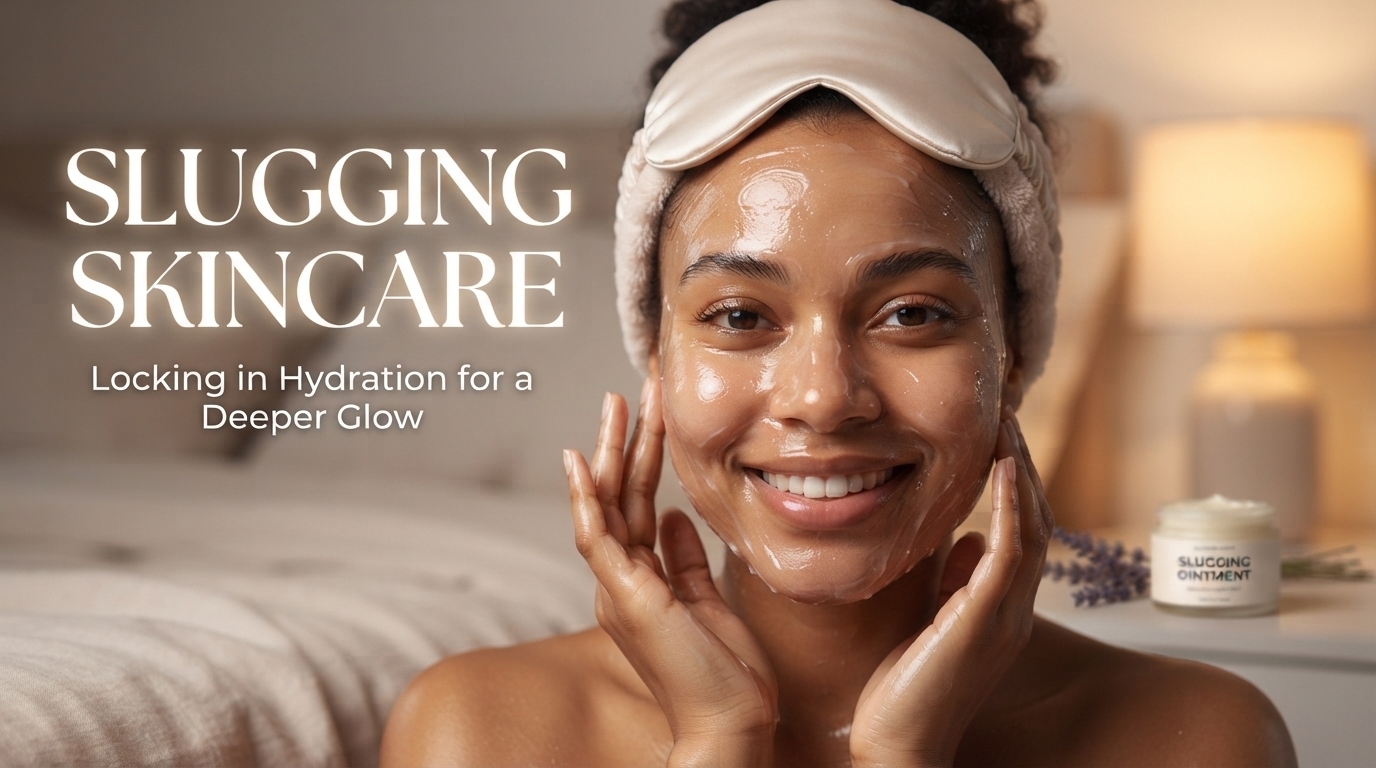
Slugging is the final step of a nighttime skincare routine. It involves applying a thin layer of an occlusive product—usually plain petroleum jelly—over your moisturizer.
An occlusive is a product that forms a protective seal over the skin. It does not add much water by itself. Instead, it helps stop the water already in your skin and skincare products from escaping.
The name “slugging” comes from the shiny appearance that petroleum jelly leaves on the face. It may look unusual, but the method itself is simple:
- Clean your face.
- Apply a hydrating product if needed.
- Apply moisturizer.
- Seal everything with a thin layer of petroleum jelly.
You do not need to cover your face with a thick coat. A small amount is normally enough to create a light protective layer.
Does Slugging Actually Work?
Yes, slugging can work well for dry, flaky, or irritated skin. It is especially useful when cold weather, indoor heating, harsh cleansers, or too many active ingredients have weakened the skin barrier.
Your skin barrier is the outer layer that helps hold in water and block irritants. When it becomes damaged, your skin may feel tight, rough, itchy, or sensitive. Petroleum jelly forms a surface barrier that reduces moisture loss while your skin rests.
The American Academy of Dermatology recommends petroleum jelly for relieving dry skin, including delicate areas such as the lips and eyelids. It also notes that ointments can be more effective and less irritating than lotions for very dry skin. Read the AAD guidance on petroleum jelly.
Slugging does not permanently repair every skin problem. It mainly supports your moisturizer and gives dry skin a better environment in which to recover.
What Slugging Can and Cannot Do
Social media often presents slugging as a solution for almost every skin concern. Its real purpose is much narrower.
Slugging may:
- Reduce moisture loss
- Soften rough and flaky areas
- Support a weak skin barrier
- Protect skin from dry air
- Make dehydrated skin feel more comfortable
Slugging cannot:
- Remove blackheads
- Clean blocked pores
- Treat active acne
- Remove closed comedones
- Fade deep scars
- Replace sunscreen
- Permanently shrink pores
If your main problem is dryness, slugging may help. If your main problem is blocked pores or acne, you will probably need a different treatment.
Who Should Try Slugging?
People with dry or dehydrated skin are usually the best candidates. Slugging may also help someone whose skin feels irritated after overusing exfoliating acids or other strong products.
Dry Skin
Dry skin does not produce enough natural oil. It may feel rough, tight, or uncomfortable, especially after cleansing. Applying petroleum jelly over a suitable moisturizer can help the skin retain moisture overnight.
Dehydrated Skin
Dehydrated skin lacks water rather than oil. Even oily skin can become dehydrated. Signs may include tightness, dullness, increased sensitivity, and fine lines that look more visible than usual.
Slugging may reduce water loss, but an occlusive layer should be applied over a hydrating moisturizer. Petroleum jelly alone does not give dehydrated skin all the moisture it needs.
Skin Affected by Cold Weather
Cold outdoor air and heated indoor rooms can make skin feel dry. Slugging once or twice a week may help protect dry areas during winter.
A Weakened Skin Barrier
Using too many acids, scrubs, retinoids, or drying cleansers can leave skin red and sensitive. During recovery, a basic routine with a gentle cleanser, plain moisturizer, and carefully applied occlusive may be useful.
Stop the product that caused the irritation and seek professional advice if your skin is swollen, painful, blistered, or severely inflamed.
Who Should Be Careful With Slugging?
Slugging is not the best option for every face. People with very oily, acne-prone, or congested skin should approach it carefully.
The American Academy of Dermatology advises people with acne-prone skin to be cautious with petroleum jelly on the face because it may trigger breakouts in some individuals. Even if plain petrolatum does not directly block your pores, the heavy layer can seal in oil, sweat, skincare products, and other material already on your skin.
Avoid full-face slugging if you:
- Develop frequent whiteheads or closed comedones
- Have active, inflamed acne
- Have very oily skin
- Sweat heavily at night
- Have an infected or unexplained rash
- React badly to heavy ointments
- Use strong prescription treatments unless your dermatologist approves it
You may still be able to use a tiny amount on dry areas such as the lips, around the nose, or on small flaky patches.
Can Slugging Cause Closed Comedones?
Slugging may cause closed comedones in some people when used over rich creams, facial oils, makeup residue, or products that don’t suit their skin.
Closed comedones are small skin colored bumps which are caused by a buildup of oil and dead skin cells in a pore. As opposed to blackheads the pore is covered by a thin layer of skin. Slugging will not clear this blockage.
The American Academy of Dermatology reports that salicylic acid, azelaic acid, and topical retinoids are among the remedies for acne and blocked pores. AAD acne-treatment guidance.
If you see new breakouts when you begin with full face treatment take a break for 2 to 3 weeks and go back to a basic routine. If the bumps improve that is a sign full face may be too aggressive for your skin.
Does Slugging Remove Blackheads?
No. Slugging does not remove blackheads because petroleum jelly cannot clear the oil and dead skin inside a blocked pore. Salicylic acid is often more suitable for blackheads because it helps open clogged pores and exfoliate dead skin. A retinoid may also help prevent new pore blockages, but both ingredients can irritate the skin when used too often.
Do not scrub or squeeze blackheads. Aggressive pressure may damage the skin and increase redness.
How to Slug Your Face Safely
The safest routine is short and simple. Do not apply several new products on the same night.
Step 1: Clean Your Face
Use a mild cleanser and lukewarm water. Remove sunscreen, makeup, sweat, and dirt before creating an occlusive layer.
Slugging over an unwashed face may trap unwanted residue against the skin.
Step 2: Leave Your Skin Slightly Damp
Pat your face gently with a clean towel. Do not rub it. Leaving a little moisture on the skin can help your moisturizer spread more easily.
Your face should be damp, not dripping wet.
Step 3: Use a moisturizer.
Choose a fragrance free moisturizer which is right for your skin type. Ingredients like glycerin, hyaluronic acid, and ceramides may improve hydration and skin barrier.
Give a minute for the moisturizer to absorb.
Step 4: Apply a Light Coverage
Apply a pea sized amount to the full face. Wipe it in with clean fingertips and gently massage into the skin. Pay special attention to dry areas. Also stay away from the eyelash line, nostrils, hairline, and any area that tends to break out.
Step 5: Save Your Pillow
Let time pass for 15 to 30 minutes before bed. Use fresh pillowcase and tie up long hair. In the morning, go easy or rinse with warm water as your skin feels good.
How Often Should You Slug?
Start with one time a week. If your skin tolerates it fine and you don’t see new breakouts, you can increase to twice a week.
Daily slugging is a no go for beginners. Also it doesn’t always show better results and your skin may react to it.
Here is the guide:
| Skin condition | Suggested approach |
| Very thin skin | Start once or twice a week. |
| Skin that has dry spots | Apply to dry areas only. |
| Combination skin | Avoid the oily T-zone |
| Oily skin Spot | slug dry areas only |
| For acne prone skin | Ask a dermatologist before full face use. |
| Irritant skin | Try out a simple routine which leaves out all the tough actives. |
These go out as general tips not as medical advice. Also it may be that your skin requires a different method.
Ingredients to Avoid Putting in Petroleum Jelly
An occlusive layer also changes the way products react on your skin. It may cause irritation by a strong ingredient is in close contact with the skin for a longer time.
Do not use topical treatments for the issues at hand unless a dermatologist has said it is okay.
Ingredients to avoid:
· Retinol or prescription retinoids
· Strong alpha hydroxy acids
· Salicylic acid treatments
· Benzoyl peroxide
· Strong vitamin C formulas
· Peels or exfoliating masks
· Products that already sting or burn
If a treatment causes dryness, it is put out by sealing in petroleum jelly. Also that heavy layer of it may instead make some active ingredients seem more potent rather than milder.
A better option is to use moisturizer before and after the active product which is what we term the sandwich method. Also follow the product directions or that of your dermatologist.
Can you use Azelaic Acid with slugging?
Azelaic acid is a treatment for acne, blocked pores, redness, and post inflammatory hyperpigmentation. Into current practice the American Academy of Dermatology has included azelaic acid as a recommended treatment option for acne. View the AAD acne guideline highlights.
That doesn’t mean you should put petroleum jelly over the azelaic acid right away. If this is your first time with the ingredient try using it without the slugging first in order to see what your skin thinks of it.
A basic level is:
· Use azelaic acid on one night.
· Apply a regular moisturizer.
· Do a different recovery routine tonight.
· If your skin doctor gives you a routine which includes both products use them as directed.
Where does slugging play in skin cycling?
Skin cycling is a practice in which active products and recovery products are used on different evenings. A typical four night cycle includes:.
· An exfoliation night
· A retinoid night
· A recovery night
· Another recovery night
Slugging works best for recovery nights which are focused on moisture and barrier support. Also do not put on a heavy occlusive layer on exfoliation or retinoid nights unless your dermatologist says it is ok.
Here’s a basic example:
Night Routine
· Night 1 Gentle cleanser, exfoliant, moisturizer
· Night 2 Gentle cleanser, retinoid, moisturizer
· Night 3 Gentle cleanser, moisturizer, optional pillaging.
· Night 4 Gentle cleanser and moisturizer
This is just an example of a schedule. What we see is sensitive skin may require more time for recovery, also some people do not see the need for skin cycling at all.
Do you slug your whole face?
No. Partial and spot slugging is the way to go instead of full face.
You may use a little of:
· Dry lips
· Flaky cheeks
· The sides of the nose
· Dry patches near the jaw
· Areas irritated by cold weather
· Avoid breakouts, oil in your T zone, and areas which get those whiteheads.
Spot treatment provides dry areas with extra protection without putting a heavy layer of product on areas that don’t require it.
How soon can be seen results of slugging?
Slug away and see that dry skin softens up by morning. It’s due to the reduced overnight moisture loss. If your skin’s barrier is damaged it may take longer to see results.
Do not base your judgment on immediate results. See how your skin reacts in upcoming days.
Results in many cases are:
• Less tightness after washing
• Fewer flaky patches
• Reduced discomfort
• Moisturizer lasting longer
Stop if you notice itching, burning, redness, swelling, or new clusters of bumps.
Mistakes which affect your skin
Using Too Much Product
A thin layer is what is needed. Also petroleum jelly in excess does not feel good, it transfers to bedding and leaves skin very greasy.
Applying It Over Dirty Skin
Slugging is for after you cleanse. Also do not wear in makeup, sunscreen, or sweat.
Combining It With Strong Actives
Do not put extra pressure on your retinoid, acid, or acne treatment. That may cause increased irritation.
Starting With Daily Use
Start out once a week. Give your skin time to see how it reacts.
Ignoring New Bumps
If you notice closed comedones or pimples, do not increase your treatment at that time instead of what you are doing. Also, when you introduce many products at once it is hard to determine which one is the cause.
Is Slugging Better Than Moisturizer?
Slugging and moisturizing play different roles. What a moisturizer does is add water to the skin, soften it and support the barrier which includes ingredients like ceramides or glycerin. Petroleum jelly on the other hand mainly creates a seal.
Therefore we use petroleum jelly in addition to moisturizer instead of in its place. If you have a moisturizer that does a great job for your skin overnight then you may not need to slug.
When Should You See a Dermatologist?
See a dermatologist if the dryness persists after you’ve got into a gentle routine or if your skin becomes painful, swollen, cracked, or infected.
Professional input also is useful when you have:.
· Persistent closed comedones
· Deep or painful acne
· Severe itching
· A spreading rash
· Possible eczema or rosacea
· Dark spots which are worsening
· Irritation from prescribed treatment
Slugging may benefit dry skin but they do not diagnose or treat all skin issues.
Frequently Asked Questions
Is slugging good for acne-prone skin?
Full face slugging may be too aggressive for acne prone skin and we see that it may trigger breakouts in some people. Consult a dermatologist before trying it. Spot slugging what is a small dry area may be a better option, but stay away from active pimples and clogged areas.
Does petroleum jelly clog pores?
Petroleum jelly is for the most part well tolerated but that does not mean it will work for all. It serves as a barrier to other products, oil, sweat, and residue. Those that see break out should stop using it on the face.
Can I slug under my eyes?
A little of it may help for dry skin around the eyes, but stay away from the lash line and inside of the eye. If you get small bumps, swelling or irritation stops.
Can I go slug it out during the day?
You can use it for small dry areas; also petroleum jelly leaves a shiny finish which may not work well under make up. At night time it is usually more practical. It doesn’t replace daytime sunscreen.
Can I slug after using retinol?
For most beginners it is better to use retinol and slugging on separate days. Retinol application under a sealed layer may cause dryness or irritation. If you are using a prescribed retinoid follow your dermatologist’s instructions.
Is slugging suitable for sensitive skin?
May work for sensitive skin if you use plain petroleum jelly over a gentle, fragrance free moisturizer. Do a patch test first and stay away from products that sting or which contain strong active ingredients.
Can slugging make closed comedones worse?
It may cause closed comedones on sensitive skin which doesn’t do well with heavy or clogging products. Stop full face slugging if you notice new skin colored bumps and revert to a simple, non-comedogenic routine.
Is Slugging Worth Trying?
Slip in a slumber of products instead of your regular skincare routine which can work great when your skin is dry, flaky, or has issues with moisture retention. What it does is create a protective barrier over your moisturizer but do not turn to it for help with acne, blackheads or white heads.
Start out with a thin application once a week or do it only on dry patches. For the other nights use the heavy active ingredients, and stop if your skin breaks out or gets irritated. We aren’t going after a trend here we are to give your skin only what it truly requires.