
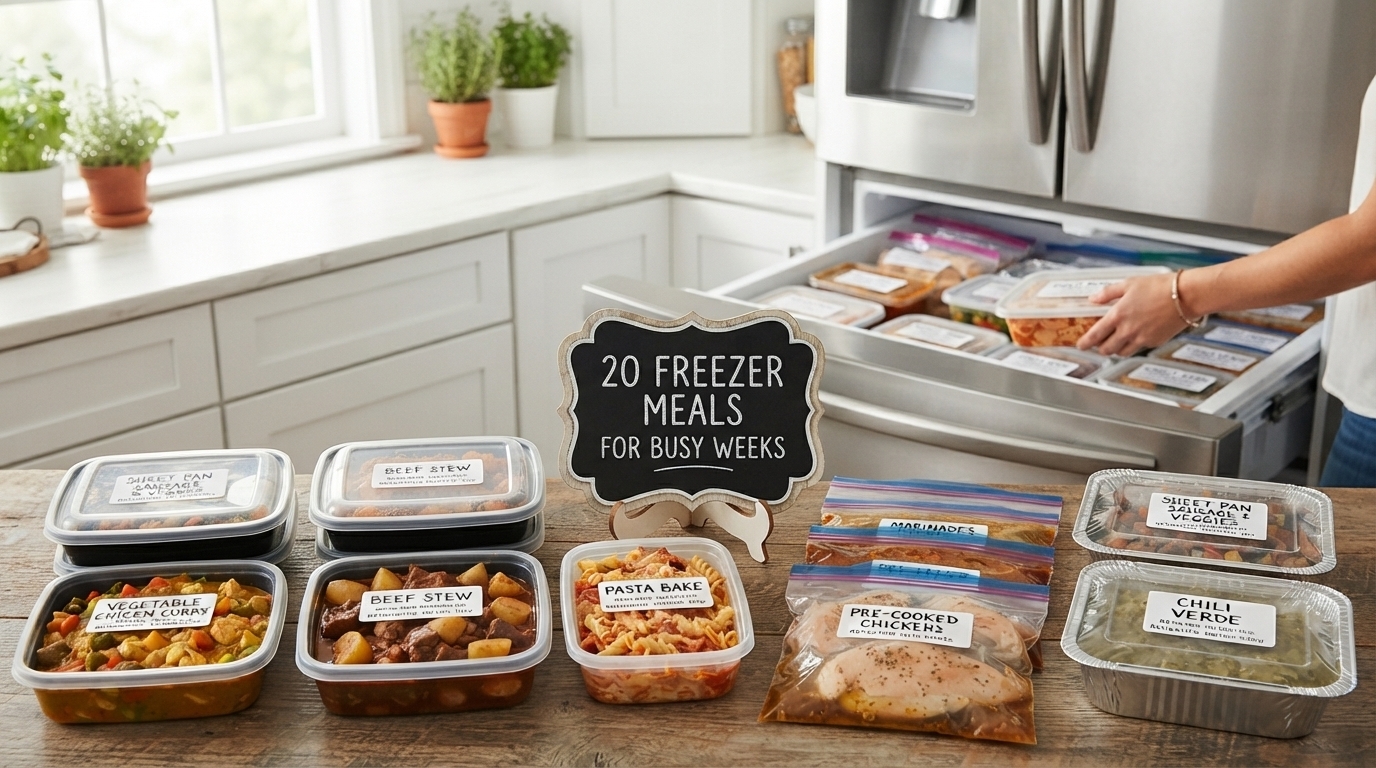

Last month, I found a jar at the back of my freezer with no label and no idea what was inside. There were frozen peas, two chicken thighs, and many half-used bags beside it, but none of them could save dinner. That modest freezer mess made me understands that I didn’t need more food, but rather a better method.
I’m Emily Carter, a home cook and meal-planning fanatic who enjoys developing practical solutions to make hectic weeks easier. After planning a basic system for meal planning, packing, and labeling, I compiled this list of freezer meals for times when cooking from scratch appears impossible.
You can prepare all 20 meal ideas in a planned batch-cooking session, or add a few to your freezer.
Why Freezer Meals Make Busy Weeks Easier
A frozen dinner takes most of the work out of a hectic evening. Instead of selecting a recipe, verifying ingredients, chopping veggies, and cooking from the start, simply thaw, heat, or finish the prepared meal.
This strategy can benefit working parents, students, caretakers, and anybody else who frequently finds themselves with little time or energy to prepare at the end of the day. It also helps to reduce food waste by freezing meat, veggies, sauces, and leftovers before they deteriorate.
The finest freezer dinners have three characteristics: they freeze without losing too much texture, can be safely reheated, and require little effort on serving day.
Can You Really Make 20 Freezer Meals in Four Hours?
Yes, but don’t try to cook 20 completely different foods. The quickest technique is to use shared ingredients and cook multiple meals at the same time.
For example, onions can be used in chili, soup, curry, pasta sauce, and chicken stew. Cooked ground beef can be used to make tacos, cottage pie, and baked pasta. Shredded chicken can be used in burritos, soups, and enchiladas.
A practical four-hour schedule looks like this:
1. Spend 20 minutes sorting ingredients and labeling.
2. Chop all shared vegetables at once.
3. Start with soups and sauces, which can cook while you work.
4. Make raw marinated dishes next.
5. Prepare casseroles, burritos, and pasta meals.
6. Cool prepared foods in shallow vessels.
7. Before freezing any package, label it.
Twenty meals could be 20 individual portions or 20 family-sized entrees. In a typical household kitchen, it would be challenging to prepare twenty large, unconnected dinners in four hours. Smaller servings and a combination of family dinners are more practical.
Before You Begin: Freeze Meal Supplies
You don’t need expensive equipment, but the correct containers help reduce leaks, waste, and freezer burn.
Prepare:
• Use freezer-safe containers with tight closures.
• Use foil baking trays for casseroles.
• Permanent marker or freezer labels.
• Measuring cups and spoons.
• A food thermometer.
• A big baking sheet to keep full bags flat.
On each label, write the meal name, freezer date, cooking directions, and any items that will need to be added later. Never assume you’ll remember what’s in an unmarked container next month.
20 Freezer Meals to Make This Weekend
Cooked dinners, uncooked freezer packs, and recipes that require a quick finishing touch are among the suggestions below. Because food expands when frozen, use freezer-safe packaging and leave some room in liquid-filled containers.
1. Slow Cooker Chicken Fajitas.
Place the cut chicken breast, bell peppers, onions, mild spices, and tomato sauce in a freezer bag. Freeze it flat without cooking. Thaw overnight in the refrigerator, and then combine everything in a slow cooker and cook until the chicken reaches 165°F. Serve with warmed tortillas, rice, or salad. Freeze the tortillas individually so they don’t get damp.
2. Beef and Bean Chili
Cook the ground beef with onions, beans, tomatoes, stock, and chili seasoning. Allow the chili to cool before dividing into meal-sized containers.
Thaw in the refrigerator and then reheat on the burner until steaming hot. Add cheese, sour cream, or avocado after warming, not before freezing.
3. Chicken and Veggie Soup
Combine the chicken, carrots, celery, onion, stock, and seasonings in a saucepan. Spaghetti, when frozen, becomes too soft; instead, leave it out of the soup at this point.
While the soup is simmering, add the fresh noodles to enhance the texture and add only 10 minutes to the entire boiling time.
4. Baked Pasta Ziti
Prepare ziti with a mixture of tomato sauce, ricotta, mozzarella and cooked ground meat or veggies. Place it on a freezer safe baking pan, no need to put in oven.
Wrap up the dish well. Also try to thaw it in the fridge in advance before putting it in the oven, or if you are in a rush you can put it in as is which will just lengthen the cooking time. Once it is ready to serve make sure the center has reached at least 165°F.
5. Chicken in Enchiladas
Fill each tortilla with cooked shredded chicken, beans, and a little of cheese. Place them in a foil pan and cover with enchilada sauce.
Freeze the cheese you have left out separately and then add it before baking. This is a great option for you when are looking to stay in and don’t have a lot of time in the kitchen.
6. Turkey Meatballs
Grind up turkey; add in breadcrumbs, egg, herbs and spices. Make meatballs and freeze them in a single layer on a pan.
Once solidified transfer to a freezer bag. From the frozen state cook them in tomato sauce or bake until they reach a safe internal temperature of 165°F.
7. Lentil and Vegetable Stew
Cook lentils with tomatoes, onions, carrots, garlic, ginger and mild curry spices. For a creamy version of this dish add some coconut milk.
Cool off and freeze in individual or family size packages. Rice may be frozen separately, but it has to be chilled down quickly, packaged right away, and fully brought back to a rolling boil upon reheating.
8. Beef Tacos
Brown the ground beef, onions, and taco seasoning. Drain of any extra fat and let the filling cool.
Freeze in thin flat bags for quick defrost. On the day of service reheat the beef and serve with tacos, burritos, rice bowls or salad.
9. Chicken and Broccoli Rice Casserole
In a baking dish combine the cooked chicken, rice, just out of the steamer broccoli, and creamy sauce. Also it should be well wrapped and put in the freezer.
Broccoli is best when left a little on the firm side as it will soften up more upon reheat. Right before putting in the oven sprinkle with fresh bread crumbs.
10. Stuffed Peppers
Fill half or all of bell peppers with cooked ground pork, rice, tomatoes, herbs, and cheese. Place in a covered baking dish until frozen.
Overnight defrosting is key for even results. If you are cooking from frozen note that it will take longer and also use a food thermometer to check doneness.
11. Broiled Chicken
Place your chicken breasts or thighs, barbecue sauce, onions, and seasonings into a freezer bag. Thaw the bag out in the refrigerator before putting the ingredients in the slow cooker.
When the chicken is done cooking shred it. Put it in a sandwich, wrap, baked potato, or rice bowl.
12. Vegetable Lasagna
Layer in your lasagna sheets with tomato sauce, spinach, mushrooms, ricotta, and mozzarella. Place the dish in a freezer safe pan and do not bake.
Watery veggies will make your lasagna out soft, thus it is best to cook the mushrooms and spinach first which will help to reduce extra moisture. Also try to thaw the lasagna out overnight before baking as directed.
13. Morning Burritos
Tortillas filled with scrambled eggs, sautéed potatoes, beans, cheese, and cooked turkey sausage. Let the filling cool a bit before rolling the burritos.
Wrap each burrito separately and put them in a freezer bag. Thaw out over night or reheat from frozen in short microwave sessions.
14. Shepherd Pie
Make a filling which has ground lamb or beef, carrots, peas, onion, and gravy. Put the mashed potatoes on top.
Before you bake it, freeze the pie. For a better potato texture use a little less milk than you usually do when making the mash. Thaw in the fridge and then bake until the filling is bubbling.
15. Chickpea Tomato Soup
Cook up a batch of chickpeas with tomatoes, onions, garlic, spinach, stock and herbs. This simple dish does well to put away for later as it doesn’t have pasta, cream, or delicate vegetables.
Freeze separate servings for easy lunches. Once heated up add in fresh lemon juice or herbs to enhance the flavor.
16. Marinated Air Fryer Chicken Thighs
Place the boneless chicken thighs in a freezer bag with olive oil, lemon juice, garlic, paprika, salt, and pepper. Press out any extra air and freeze the bag flat.
Thaw the chicken completely in the refrigerator before cooking. Cook the thighs in a single layer, following the directions on your air fryer, until the thickest section reaches 165°F.
For detailed timings, add an internal link to your air fryer chicken thighs recipe here:
[INTERNAL LINK NEEDED: air fryer chicken thighs recipe]
17. Garlic Butter Air Fryer Steak Packs
Freezing cooked steak might alter its texture, so prepare it as a raw meal kit. Freeze individual steaks with a small bottle of seasoned garlic butter.
Thaw the steak in the refrigerator, pat it dry, and then cook it in the air fryer. The USDA advises grilling entire beef steaks to at least 145°F and giving them a three-minute rest.
Serve with freeze-friendly mashed potatoes or veggies. Check air fryer steak recipe for detailed recipe.
[INTERNAL LINK NEEDED: air fryer steak recipe]
18. Tomato and Basil Pasta Sauce
Cook tomatoes with onions, garlic, herbs, and optional ground beef. Allow the sauce to boil until it thickens, then cool completely.
Freeze the sauce without the pasta. Boiling fresh pasta as the sauce reheats takes only a few minutes and results in a far superior texture than freezing everything together.
19. Sweet Potato and Black Bean Burritos
Fill each tortilla with cooked sweet potato, black beans, rice, mild seasonings, and cheese. Do not add fresh lettuce, sour cream, or salsa before freezing.
Wrap the burritos securely. Add the new toppings after warming to keep the burrito from becoming wet or soggy.
20. Beef and Vegetable Stew
Cook the meat, potatoes, carrots, onions, stock, and herbs until cooked. Cool the stew in shallow containers before freezing it.
Which Meals Freeze Best?
Potatoes may soften somewhat after freezing, so choose waxy potatoes and avoid overcooking them. Reheat the stew carefully on the burner; adding a little stock if it gets too thick.
Dishes with sauces or plenty of moisture often freeze better than crisp or delicate dishes. Chili, soup, curry, stew, spaghetti sauce, casseroles, meatballs, and marinated meat are all viable possibilities.
The following foods frequently lose their quality:
• Lettuce and uncooked salad greens.
• Mayonnaise-based salads.
• Crispy fried food.
• Fresh, soft herbs.
• Uncooked potatoes.
• Cream-heavy sauces.
• Fully cooked pasta.
• Cucumber and other watery veggies.
Some of these foods are okay to freeze, although they may separate, melt, or turn watery. Safety and quality is not the same thing.
Does Frozen Food Lose Its Nutritional Value?
The USDA states that freezing has little effect on the nutritional content of meat and poultry. It also helps food retain its vitamin content, color, taste, and texture when kept at 0°F or lower. USDA freezing and food-safety guidance.
A frozen meal’s nutritional value is mostly determined by its components. A meal made with veggies, legumes, lean protein, and healthy grains may be frozen and still be healthful. A food rich in salt, saturated fat, or added sugar does not become healthier just because it was made at home.
To create balanced freezer meals, strive to include:
· Protein sources include chicken, fish, beans, lentils, tofu, and lean meat.
· Vegetables
· Carbohydrates include rice, potatoes, pasta, and whole grains.
· Use a reasonable amount of sauce or healthy fats.
On serving day, add fresh fruit, salad, yogurt, or herbs if the frozen dish lacks color or texture.
How Long Do Freezer Meals Last?
Food stored at 0°F (-18°C) can be kept safe for a long period, but its flavor and texture deteriorate. Most handmade freezer dinners should be consumed within two to three months to maintain their freshness.
The USDA gives the following quality ranges:
| Food | Recommended freezer time |
| Casseroles | 2–3 months |
| Soups and stews | 2–3 months |
| Frozen dinners and entrées | 3–4 months |
| Cooked meat | 2–3 months |
| Cooked poultry | Up to 4 months |
| Raw ground meat | 3–4 months |
| Raw poultry pieces | Up to 9 months |
These times are primarily concerned with the quality of food that remains frozen at 0°F. Labeling each meal allows you to use the oldest packages first.
How Far in Advance Should You Prepare Freezer Meals?
Preparing meals two to eight weeks in ahead ensures that you have a usable supply without overflowing your freezer with food that may spoil before you need it.
Begin planning three or four weeks in advance for a new baby, surgery, a move, or a tough work period. Instead than attempting to finish the entire freezer in one long session, add two or three meals per weekend.
Place a written freezer list on the door. Remove each meal from the list as you use it, so that forgotten containers do not sit at the back for months.
Cool Food Safely Before Freezing
Do not let a large pot of soup, chili, or stew sit on the counter for hours. The USDA recommends refrigerating or freezing perishable food within two hours, or one hour if the room temperature exceeds 90°F. Divide cooked food into shallow containers so it can cool rapidly. Once chilled, seal the containers, label them, and store in the freezer. Keep your freezer at 0°F (-18°C) or below and your refrigerator at 40°F (4°C) or lower.
How to Prevent Freezer Burn
Freezer burn happens when food loses moisture and becomes exposed to air. It causes dry, pallid patches and can alter the flavor or texture. It may not necessarily make food dangerous.
To prevent this:
• Use freeze-safe packaging.
• Press out excess air from freezer bags.
• Wrap casseroles tightly.
• Freeze food in appropriate serving proportions.
• Use meals within their best quality time.
• Avoid putting hot containers immediately into a crowded freezer.
• Freeze packs flat before stacking.
Remove as much air as possible while avoiding crushing the food. An almost empty container contains more air, which raises the risk of freezer burn.
Refrigerator, cold water, and microwave are the three safe methods for thawing.
The Safest Ways to Thaw Freezer Meals
Refrigerator, cold water, and microwave are the three safe methods for thawing.
The most convenient way to thaw most prepared meals is in the refrigerator. Transfer the food from the freezer to the refrigerator one or two days before you intend to cook it.
For cold-water thawing, place the food in a leak-proof bag and replace the water every 30 minutes. Cook it soon after thawing.
If you use the microwave’s defrost function, cook the meal right away since some parts may begin to warm or cook while defrosting.
Never thaw meat, casseroles, or other perishable foods on your kitchen counter.
How to Reheat Freezer Meals Safely
Heat leftovers and cooked freezer meals to an internal temperature of 165°F. Use a food thermometer to check the temperature in the center or thickest area.
Stir soups, sauces, and stews during reheating, as the exterior may become hot before the middle. Allow casseroles to rest briefly before inspecting numerous locations.
When cooking a raw frozen meal, use the following temperature for the main protein:
• Chicken and turkey: 165°F.
• Ground beef or pork at 160°F.
• For whole beef, pig, lamb, or veal steaks and chops, cook at 145°F and allow three minutes to rest.
• Fish at 145°F.
Do not judge safety based solely on color, bubbling sauce, or cooking time.
A Simple Four-Hour Freezer Prep Plan
If you want to cook 20 meals in one sitting, reduce the number of separate recipes. A workable plan may include:
• 4 bags of chicken fajitas
• Four packs of marinated chicken thighs.
• 4 containers of chili.
• Four trays with baked pasta.
• Four servings of soup.
This yields 20 meals while using only five major recipes.
Complete the work in the following order:
1. Label each bag and tray.
2. Clean your hands and the work table.
3. Chop vegetables.
4. Begin the chili and soup.
5. Prepare chicken freezer bags.
6. Assemble pasta trays.
7. Divide, chill, seal, and freeze cooked meals.
8. Clean the kitchen and update your freezer list.
Keep raw poultry and beef apart from cooked or ready-to-eat meals. Alternate cutting boards or carefully clean them between activities.
Frequently Asked Questions
What are the greatest freezer dinners for a busy family?
Soups, stews, chili, meatballs, casseroles, curries, spaghetti sauces, burritos, and marinated chicken provide excellent selections. Choose dishes that your family already enjoys rather than stuffing the freezer with novel recipes.
Can you cook frozen meals without first thawing them?
Some dishes can be prepared or reheated from frozen, although they may require approximately 50% longer cooking time. Follow the recipe and container instructions. Large casseroles frequently heat more evenly when frozen overnight in the refrigerator.
Can I re-freeze a thawed freezer meal?
Food that has been safely thawed in the refrigerator can usually be refrozen, though the texture may change. If you thawed it in cold water or the microwave, cook it before refreezing.
Should I freeze casseroles before or after they’re baked?
Many casseroles freeze nicely before being baked. This keeps them from being cooked twice and turning dry. Ingredients such as raw poultry must still be cooked to a safe temperature during the final bake.
Can glass containers go directly from the freezer to the oven?
Use only glass containers labeled as freezer- and oven-safe. Sudden temperature changes can cause glass to crack. Allow the container to thaw as indicated, rather than placing regular cold glass in a hot oven.
How can I prevent pasta from turning soft?
Slightly undercook the pasta or freeze the sauce separately. Pasta tends to soften when reheated, especially if it is in a liquid sauce.
Are frozen meals healthy?
They could be. A frozen meal is simply a storage mechanism. The health benefits vary depending on the ingredients; portion size, salt, added sugar, and cooking method.
Make Your Next Busy Week Easier
You don’t have to cook all 20 freezer dinners in one day. Start with four or five dinners that your family already appreciates, then double each recipe and freeze the extra portions. Within a few weekends, you can accumulate a useful supply without spending the entire day in the kitchen.
Before you begin, plan your first five meals; make a shopping list, and clear room in the freezer. The effort you put in today can result in several tranquil evenings later.