

Make Tile Look Fresh Again
Hello, I am Sarah and with a corporate job it is very difficult to find even twenty minutes to clean my bathroom. The tiles look fine, but the grout between them has turned gray, especially around the shower. I remember the last time, I tried cleaning it: an old toothbrush, sore knees, and an entire afternoon gone. There has to be an easier way.
If you have ever wondered how to clean grout without spending hours scrubbing, you are facing the same problem. Grout holds onto dirt, soap residue, and moisture, but aggressive brushing is not always necessary. The LivingSwag Editorial Team reviewed manufacturer recommendations and household safety guidance to identify practical methods that let cleaning solutions do most of the work.
Why Grout Gets Dirty Faster Than Your Tiles
Many homes have cement-based grout, which contains tiny openings that absorb moisture and trap dirt. Even when your tiles look clean, those narrow grout lines collect soap residue, grease, tracked-in soil, and mineral deposits.
Bathroom grout often darkens because water and soap remain on the surface after showers. Kitchen backsplash grout becomes discolored when cooking oils and food splatters settle into the joints. Floor grout usually collects dirt carried indoors on shoes.
Not every dark patch is simply dirt, however. Persistent discoloration may also indicate mildew, damaged grout, failing caulk, or a stain that has penetrated below the surface.
Understanding the cause helps you choose a safer cleaning method without reaching immediately for harsh chemicals.
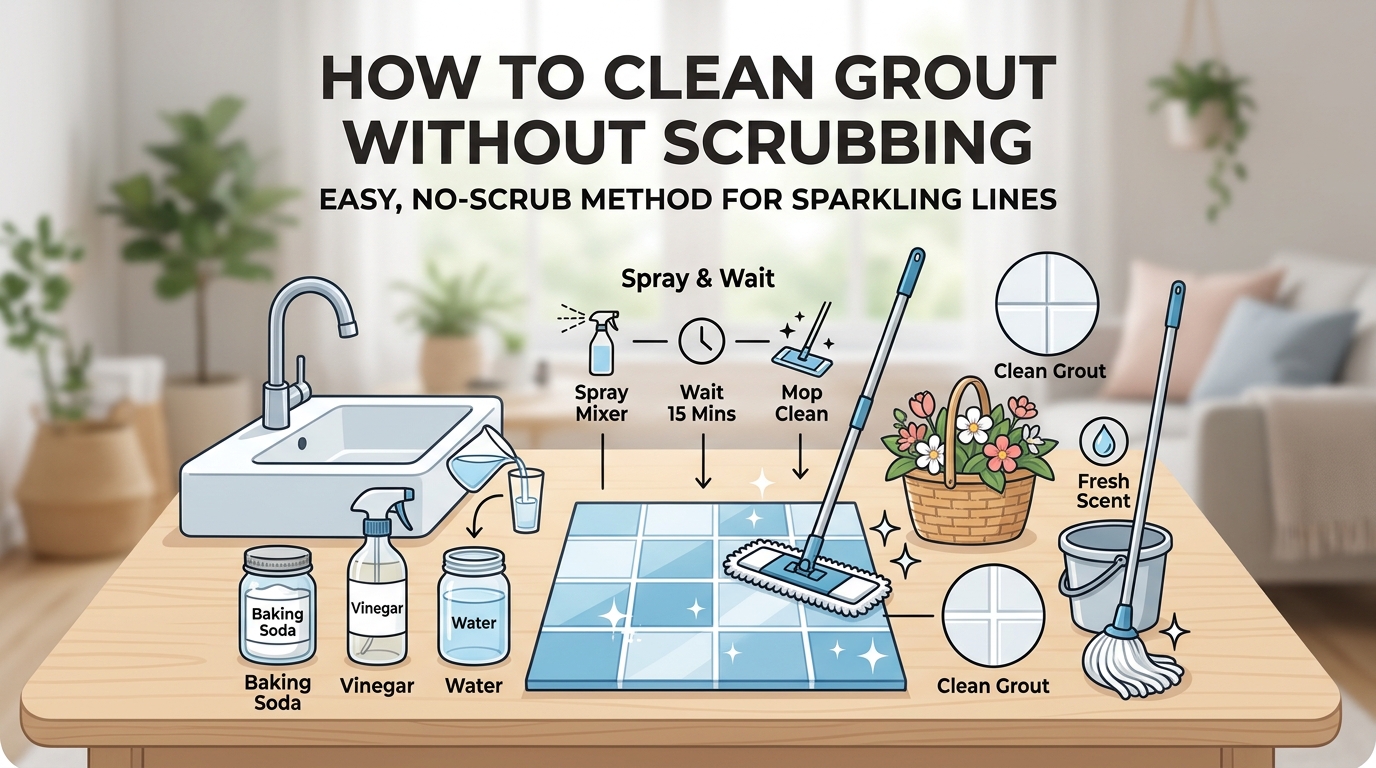
How to Clean Grout Without Scrubbing: The Easy Method
For most ceramic or porcelain tiles, begin with a simple hydrogen peroxide and baking soda mixture. It works well on ordinary filth and light discoloration.
Before implementing it widely, try a small hidden part. Colored grout, natural stone, sensitive finishes, and broken joints may all require a manufacturer-approved cleaning.
What You Will Need:
• 1/2 cup baking soda.
• Use approximately ¼ cup of household 3% hydrogen peroxide.
• A small bowl and spoon.
• Use a soft microfiber cloth or sponge.
• Clean water.
• Protective gloves.
Do not add bleach, vinegar, ammonia, or any other cleaning chemicals to this mixture.
Follow These Five Steps
1. Remove any loose material. Sweep floor grout or wipe off shower and backsplash tiles with a moist towel. Removing surface dirt allows the cleaner to get to the grout.
2. Prepare paste. Mix the baking soda and 3% hydrogen peroxide until it’s spreadable. Add the peroxide gradually to keep the paste from becoming runny.
3. Apply immediately on the grout. Spread a thin layer across the grout lines. A spoon or gloved finger is ideal for targeting tiny joints.
4. Allow to sit for 10-15 minutes. Allow the cleanser time to dislodge residue and brighten light stains. Avoid allowing the paste to dry fully since dried baking soda is more difficult to remove.
5. Rinse and wipe well. Using a moist microfiber cloth or sponge, remove the paste, rinse with fresh water, and pat dry. If there is still some discolouration, repeat once.
While the peroxide can help remove some stains, baking soda helps keep the peroxide against the grout. Although this method minimizes washing, grout with severe stains could still need to be gently wiped or brushed.
Instead of adding more chemicals or strengthening the peroxide, repeat the process for really unclean areas.
Choosing the Best No-Scrub Grout Cleaner for Your Situation
The best cleaner depends on the type of stain, the grout material, and the surrounding tile. A product that works well on porcelain may damage marble or discolor dyed grout.
| Cleaning option | Best for | Typical approach | Main precaution |
| Baking soda and 3% hydrogen peroxide | Light stains and everyday discoloration on suitable tile | Apply paste, wait 10–15 minutes, wipe, and rinse | Patch-test colored grout and avoid delicate surfaces unless approved |
| Oxygen-based grout cleaner | Heavier staining on compatible grout | Follow the product’s dilution, contact-time, and rinsing instructions | Confirm it is suitable for the tile, grout, and sealer |
| pH-neutral tile and grout cleaner | Routine cleaning, sealed grout, and many sensitive surfaces | Apply according to label directions and wipe clean | Choose a product specifically compatible with your surface |
| Steam cleaner | Surface grime on intact, steam-safe ceramic or porcelain installations | Use the appropriate setting and wipe away loosened dirt | Avoid damaged grout, loose tiles, and surfaces the manufacturer advises against steaming |
| Natural-stone cleaner | Marble, limestone, travertine, and other sensitive stone | Use a stone-safe cleaner and follow label instructions | Avoid acidic cleaners, vinegar, and unsuitable peroxide treatments |
A pH-neutral cleaner is neither strongly acidic nor strongly alkaline. Tile-care manufacturers commonly recommend these products for routine maintenance because harsher household cleaners can damage grout or stone over time. Custom Building Products: TileLab Grout & Tile Concentrated Cleaner
When an Oxygen-Based Cleaner Makes More Sense
Oxygen-based cleansers are effective when grout stays dull despite regular washing. Instead of believing that any laundry or home oxygen bleach will work, look for a solution that is particularly labeled for tile and grout.
Mix the product exactly as specified, apply it to the grout, allow the recommended contact time, and thoroughly rinse. Never mix it with chlorine bleach or any other cleansers.
If the label does not specify if the product is suitable for your grout, tile, or sealer, select a different alternative.
When a Steam Cleaner Can Help.
Steam can loosen surface grime without using cleaning chemicals. Move the nozzle along the appropriate grout lines and promptly wipe away any loosened residue with a microfiber towel.
However, steam is not suitable for all installations. High temperatures or pressure can exacerbate broken grout, disrupt disintegrating caulk, or introduce moisture where tiles are already loose.
Begin with the lowest acceptable setting and follow the steam cleaner and tile manufacturer’s directions.
Bathroom Shower Grout Needs a Different Approach
Shower grout is subject to a combination of soap residue, stagnant water, and repeated humidity. A thick paste or grout-safe gel is typically easier to apply to vertical surfaces because it remains in place longer than a runny spray.
Apply your chosen cleanser to the problematic grout lines, allow the suggested contact time, and thoroughly rinse. After that, dry the area to avoid moisture remaining in the corners.
Black staining around a bathtub or shower does not usually appear on the grout. If the marks are embedded in silicone caulk, surface cleaning may not be effective. In that case, repairing the faulty caulk is frequently more successful than continuously applying stronger chemicals.
According to the Environmental Protection Agency, regulating moisture is critical to preventing mold from returning. Bathroom exhaust fans and improved ventilation help address the underlying problem. EPA: What Are the Main Ways to Control Moisture in Your Home?
[INTERNAL LINK NEEDED: how to remove hard water stains from bathroom surfaces]
Kitchen Backsplash and Floor Grout Need Targeted Cleaning
Cooking grease draws dust and food particles, which causes kitchen grout to seem darker. Start by cleaning the surface with warm water and a tiny amount of mild dish soap, then thoroughly rinse.
Once all soap residues has been removed, use your preferred grout-safe cleaning procedure. Do not combine multiple cleansers or use a second product without thoroughly rinsing the first.
Work in small sections to avoid allowing the cleaning solution to dry before removing the floor grout. A microfiber mop can help with rinsing, especially in larger tiled areas.
Replace filthy rinse water frequently. Otherwise, dislodged soil may be redistributed back into the grout lines.
[INTERNAL LINK NEEDED: how to clean kitchen tile floors safely]
Can You Clean Grout With Just Toilet Cleaner?
Some toilet bowl cleaners can temporarily remove grout stains, but that does not make them a safe or appropriate choice. These products are formulated for toilet bowls, not necessarily for cement grout, natural stone, tile sealers, or bathroom flooring.
Certain formulas contain strong acids that can weaken grout, damage sensitive stone, or strip protective finishes. Other formulas contain bleach, which introduces additional risks if another cleaning product is already present.
One grout manufacturer specifically warns against acidic cleaners on its cement grout because long-term damage may occur. Custom Building Products: Polyblend Non-Sanded Grout Guidance
The safer choice is straightforward: use a cleaner explicitly labeled for your grout and tile.
If toilet cleaner has already been applied, rinse the area thoroughly with plenty of water, ventilate the room, and do not add another chemical to counteract it. If the grout becomes soft, crumbly, or noticeably lighter, stop cleaning and contact a qualified tile professional.
Cleaning Products You Should Never Mix
No cleaning result is worth creating dangerous fumes. The Centers for Disease Control and Prevention warns against mixing household bleach with other cleaners because the combination can release hazardous vapors. CDC: Cleaning and Disinfecting With Bleach
Avoid these combinations:
• Bleach and vinegar: May release dangerous chlorine-containing fumes.
• Bleach and ammonia: Can produce hazardous chloramine vapors.
• Bleach and toilet bowl cleaner: Acidic toilet cleaners can react dangerously with bleach.
• Bleach and any other cleaning product: Unexpected ingredients can create unsafe reactions.
• Hydrogen peroxide and vinegar in the same container: Avoid combining these products; use only one method at a time and rinse thoroughly before switching.
Wear gloves, open a window or use an exhaust fan, and keep children and pets away from treated surfaces until cleaning products have been removed.
If fumes cause burning eyes, coughing, dizziness, or difficulty breathing, leave the area immediately and contact emergency services or your local poison information center.
Why Vinegar Isn’t Always an Effective Grout Cleaner
White vinegar is used in many homemade cleaning techniques; however its acidity makes it inappropriate for some grout and tile surfaces.
Repeated usage can harm some cement-based grouts, especially if they are unsealed, aged, or already deteriorated. Vinegar is also not suitable for acid-sensitive natural stone, such as marble, limestone, and travertine.
According to stone-care manufacturer instructions, certain materials are vulnerable to acids that cause etching and should be cleaned with non-acidic chemicals instead. Etching refers to chemical deterioration those results in a dull or rough mark on the stone surface. Custom Building Products: Marble, Travertine, Limestone & Slate Cleaner Guidance
What to Do When Grout Stays Dark After Cleaning
A stubborn dark line does not always mean your cleaning method failed. A variety of conditions can appear to be identical.
If grout darkens when wet but lightens after drying, it may be absorbing moisture and requires a suitable sealer. If the discoloration persists after multiple gentle cleanings, the stain may be lodged beneath the surface.
Cracking, missing pieces, and powdered grout typically signal a repair problem rather than a cleaning one. Likewise, black staining inside deteriorated caulk often requires caulk replacement.
When visible mold reappears, fix leaks, poor ventilation, and persistent moisture. When mold covers more than 10 square feet, there is substantial water damage, or the contamination is sewage-related, the EPA recommends taking extra measures or consulting experienced professionals. EPA: Mold Cleanup in Your Home
If you have asthma, significant allergies, a weakened immune system, or other health concerns, seek professional guidance before attempting mold cleanup.
Keep Grout Cleaner Without Adding More Work
Once your grout has improved, minor maintenance behaviors can help prevent future discoloration. Wipe down shower walls after each use, clean up any kitchen splatters right away, and remove outdoor debris from tile floors before it settles into the joints.
For routine maintenance, use a pH-neutral tile cleanser rather than applying strong acids or bleach frequently. To assist eliminate excess moisture in bathrooms; turn on the exhaust fan during and after showers.
If your grout is cement-based, ask if a penetrating grout sealer is appropriate. These treatments help to avoid stains, but they do not entirely waterproof the grout or protect it from severe chemicals. Custom Building Products: Aqua Mix Penetrating Sealer
Check the manufacturer’s directions before using Aqua Mix Penetrating Sealer on epoxy or factory-treated grout.
[INTERNAL LINK NEEDED: easy bathroom cleaning habits that prevent mold]
Frequently Asked Questions
Can You Clean Grout Without Bleach?
Yes. Many common stains can be removed without the use of chlorine bleach by using a pH-neutral grout cleaner, an oxygen-based cleaner, or a paste made from baking soda and 3% hydrogen peroxide. Always patch test first and choose a product that is suitable with your grout and tile. For natural stone, use a stone-safe cleaning.
How Long Should Grout Cleaner Sit Before Wiping It Off?
For a DIY baking soda and 3% hydrogen peroxide paste, 10-15 minutes is a good starting time. Commercial cleansers differ, so read the product label carefully. Do not assume that leaving a cleaner on for an extended period of time would give better results; too much contact time can result in residue, discoloration, or surface damage.
Is Hydrogen Peroxide Safe for Colored Grout?
It’s determined by the grout, colorants, sealers, and surrounding tile. Household 3% hydrogen peroxide may brighten or discolor some colored surfaces, especially after frequent usage. First, test a hidden location and let it dry before verifying the results. If the color changes, use a manufacturer-approved pH-neutral cleanser.
How Frequently Should You Clean Grout?
The appropriate timetable is determined by moisture, foot traffic, and cooking activity. Wipe down shower grout on a regular basis, clear up kitchen splatters as they occur, and clean floor grout when noticeable buildup forms. Gentle, persistent upkeep is often preferable to waiting until stains demand heavier treatment or many cleanings.
Is it possible for dirty grout to become white again?
White grout can typically look brighter when surface debris, soap residue, and minor stains are removed. Permanent discoloration, highly absorbed stains, damaged sealers, and deteriorating grout may not respond well to washing. If the proper cleaning methods do not restore its appearance, professional cleaning, grout colorant, repair, or replacement may be required.
A Cleaner Grout Line Begins with the Right Method
The key to cleaning grout without scrubbing is to use a surface-safe solution, allow enough contact time, and thoroughly rinse. Begin with a small test patch, apply the mildest option available, and solve moisture issues before stains recur.