

Written by Megan Parker
House & Small Space Living Specialist
Megan Parker does home organization for those with small spaces. She works with home owners and renters to create functional and clean living areas through easy storage tips, to help people simplify and also bring in affordable design elements that fit into busy daily routines.
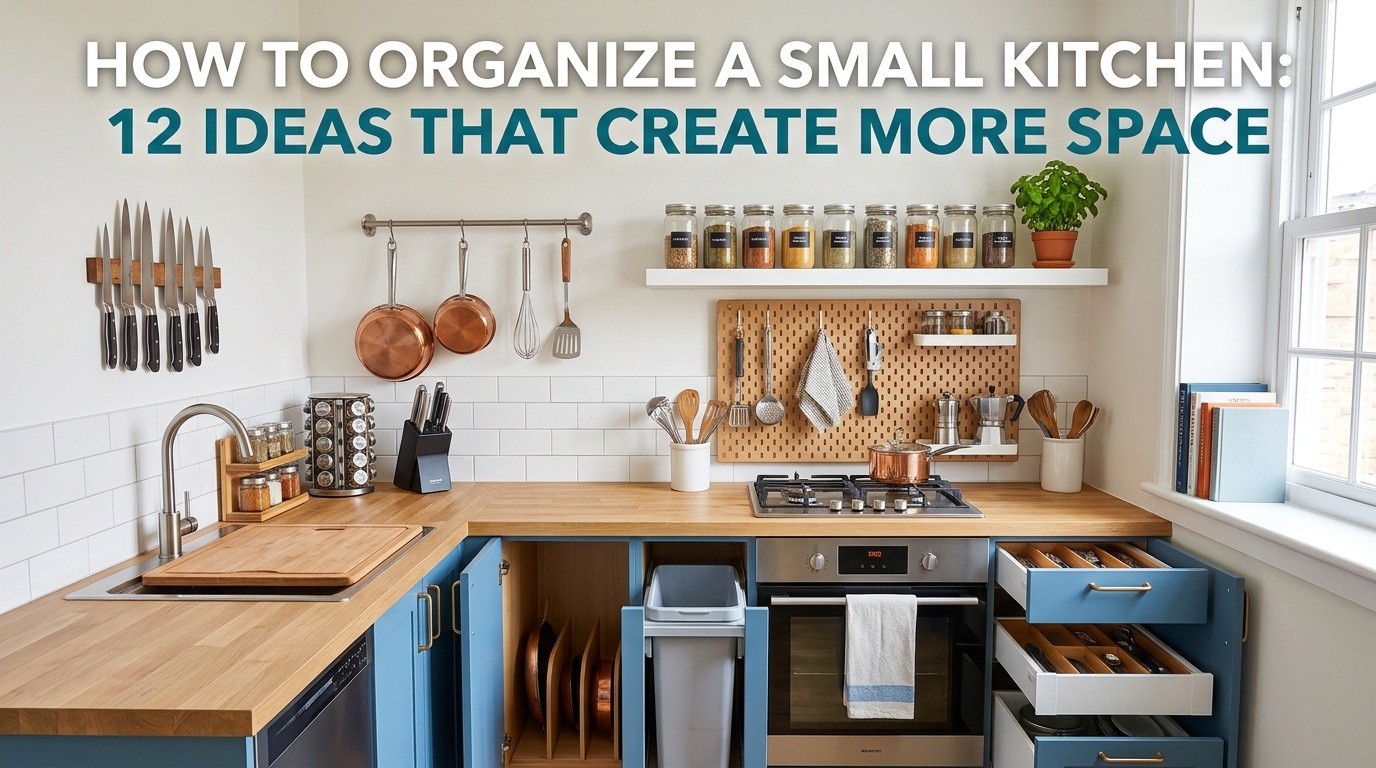
In a kitchen that is short on cabinets and work space even simple jobs like breakfast prep or finding that which you need for a recipe may be a challenge. Size doesn’t always mean you have a problem often it is a matter of what you do with what you have. Via the right small kitchen organization techniques you can achieve a more open layout, increase storage space, and make daily food preparation a breeze.
The best approach is to forgo the purchase of extra storage solutions or to put junk in new places. We are to create a system in which we keep often used items at hand, put away the less used things out of the way, and which each place has a designated use.
A small kitchen can be made to function better with the use of vertical space, that which is stored in the cabinets is organized by what is used most often, what isn’t needed is removed, and we create specific storage areas. Also even small changes like drawer dividers, shelf risers, and better use of the counter top will see great results.
Why Small Kitchens Feel Difficult to Organize
Small kitchens typically face one major challenge: limited space must accommodate a variety of activities.
A kitchen is used for the following:
• Food preparation.
• Cooking.
• Cleaning.
• Storage
• Use of appliances.
· Grocery organization.
When each area attempts to do everything, clutter accumulates quickly.
For example:
A countertop could be used to store appliances, mail, groceries, and culinary supplies. The outcome is less workspace and increased irritation.
Good organization divides these functions.
A practical tiny kitchen layout should result in:
• Preparation zones.
• Cooking zones.
• Storage zones.
• Cleaning zones.
The idea isn’t to make the kitchen appear empty. The goal is to make it efficient.
12 Small Kitchen Organization Ideas That Actually Work
1. Use Vertical Space Instead of Expanding Cabinets
One of the most common mistakes in tiny kitchens is disregarding the area above and beside the current storage.
Walls and vertical places can provide useful storage without reducing countertop space.
Useful choices include:
• Wall-mounted shelves.
• Hanging rails.
• Magnetic Strips
• Tall shelving units.
• Over-cabinet organizers.
For example, a narrow wall near a refrigerator can provide a useful storage space for:
• Spices
• Cooking utensils.
• Smaller jars.
• Frequently used tools.
Vertical storage is extremely useful in apartments when adding cabinets is not possible.
Common Mistake:
Adding too many open shelves can create visual clutter.
Better Approach:
Only display items you use regularly or items that match the kitchen style. Store less attractive or rarely used items behind closed doors.
2. Organize Kitchen Cabinets by Usage, Not Category Alone
Many people organize cabinets by placing similar items together but ignore how often they use them.
A better system is:
Daily-use zone
Keep here:
- Plates
- Glasses
- Coffee supplies
- Cooking utensils
Weekly-use zone
Store:
- Mixing bowls
- Baking tools
- Special cookware
Occasional-use zone
Move:
- Holiday dishes
- Large serving pieces
- Rare appliances
This reduces unnecessary searching and makes cooking routines faster.
3. Create a Functional Pantry Organization System
Good pantry organization is about visibility and access.
A crowded pantry often causes two problems:
- Food expires because it gets forgotten.
- People buy duplicates because they cannot see what they already have.
A practical pantry system includes:
Group Similar Items
Keep categories together:
- Baking supplies
- Breakfast foods
- Snacks
- Canned goods
- Cooking ingredients
Use Clear Containers Carefully
Clear containers can help identify ingredients quickly, but they are not required for every item.
They work best for:
- Flour
- Rice
- Pasta
- Snacks
Avoid transferring products if labels, expiration dates, or instructions are important.
4. Keep Countertops Clear With a “Daily Use” Rule
A small kitchen feels smaller when every surface is covered.
A useful rule:
Only keep items on the counter that you use almost every day.
Good countertop items:
- Coffee maker
- Toaster
- Knife block
- Frequently used appliance
Items that may be better stored:
- Rarely used mixers
- Seasonal appliances
- Extra dishes
A clear countertop creates more workspace and makes the kitchen visually larger.
5. Add Drawer Dividers to Prevent Kitchen Clutter
Drawers often become wasted space because small tools collect randomly.
Drawer inserts also help with organization:
• Cooking utensils
• Measuring tools
• Cutlery
• Food storage supplies
In a well-organized system each item has its place.
6. Use the Inside of Cabinet Doors
In many cabinets the space behind the doors is unused.
Here are uses:.
• Small racks
• Hooks
• Clip holders
• Storage baskets
Good examples include:
• Measuring spoons
• Cleaning supplies
• Spice packets
• Small kitchen tools
Also do not put heavy items on cabinet doors as that may damage the hinges in the long term.
7. Choose Multi-Purpose Kitchen Tools
Small kitchens benefit from fewer, more useful items.
Before buying a new gadget, ask:
- Do I use this regularly?
- Does it replace another tool?
- Will it create more storage problems?
Examples of useful multi-purpose items:
- Measuring cups that stack together
- Cutting boards with storage features
- Nesting bowls
- Multi-use cookware
Reducing duplicate tools often creates more space than adding new organizers.
8. Improve Refrigerator Organization
The refrigerator is another area where small kitchens lose efficiency.
A messy refrigerator creates:
- Food waste
- Forgotten ingredients
- Duplicate purchases
Helpful habits:
- Group similar foods together
- Keep leftovers visible
- Use containers for small items
- Check expiration dates regularly
For frozen foods, proper organization also helps reduce freezer burn.
Freezer burn happens when food loses moisture because of air exposure. Using airtight containers or properly sealed freezer bags can help maintain food quality.
9. Create a Dedicated Knife Storage System
Knives are one of the most important kitchen tools, but they are often stored inefficiently.
Many small kitchens waste drawer space by placing knives randomly with other utensils, which can also create safety issues.
Better knife storage options include:
- Magnetic wall strips
- Drawer knife organizers
- Compact knife blocks
- In-drawer knife trays
A magnetic strip can be especially useful in a small kitchen because it keeps knives accessible while freeing up drawer space.
However, placement matters.
Install it:
- Away from areas where children can easily reach
- Far from excessive moisture
- In a position where knives can be removed safely
Keeping knives sharp is also part of maintaining an efficient kitchen. A dull knife often requires more pressure during cutting, making food preparation slower and less comfortable.
Learning how to sharpen a knife properly can help extend the life of your kitchen tools and improve everyday cooking.
10. Add Rolling Storage for Unused Spaces
Small gaps are often overlooked in compact kitchens.
A narrow space between:
- The refrigerator and wall
- Cabinets and appliances
- Counter edges
can become useful storage.
A slim rolling cart can hold:
- Spices
- Baking supplies
- Cleaning products
- Cooking oils
- Canned goods
The advantage of rolling storage is flexibility.
You can move it when cooking and slide it back when not needed.
This works especially well for renters because it does not require permanent installation.
11. Double your cabinet space with Stackable Storage
Many cabinet spaces are left empty above stored items.
For instance:.
A cabinet shelf may be tall enough for plates and bowls but still have many inches of empty space above them.
Stacking organizers divide that space.
Useful examples:
• Shelf risers
• Stackable bins
• Plate organizers
• Expandable shelves
Stacked storage works for:.
• Plates
• Mugs
• Food containers
• Baking supplies
Common Mistake:
Buying organizers before measuring your cabinets.
Always measure:
• Width
• Height
• Depth
before purchasing storage products.
12. An organizer which doesn’t fit in only adds to the mess.
Design Kitchen Layout for Your Cooking Style.
In a well-organized small kitchen the final step is which is to create zones.
In a kitchen which does well when related activities are in the same area.
Preparation Zone
Store:
• Cutting boards
• Knives
• Mixing bowls
• Measuring tools
Place these on your main kitchen work space.
Cooking Zone
Store:
• Pots and pans
• Cooking utensils
• Spices
• Oils
Keep them close to the stove.
Cleaning Zone
Store:
• Dish soap
• Sponges
• Cleaning supplies
• Trash bags
Keep these near the sink.
This approach reduces unneeded movement in the kitchen.
Instead of putting out all the cooking tools and ingredients from which to choose, everything for a certain task goes together.
How to Make a Small Kitchen Look Bigger
Organization is not only about storage. The way a kitchen looks can also affect how spacious it feels.
Small changes can create a more open appearance.
Keep Visual Clutter Low
Too many items displayed openly can make a kitchen feel crowded.
Try:
- Limiting countertop decorations
- Matching storage containers
- Keeping appliances stored when not needed
A cleaner visual layout often makes the room feel larger.
Use Light and Reflective Surfaces.
Small kitchens frequently benefit from:
• Bright illumination.
• Light-colored walls.
• Reflective backsplashes.
• Glass cabinet doors.
These elements can assist light in moving through the space.
Avoid overfilling storage.
A closely packed cabinet is difficult to utilize.
Allow some breathing room so that items can be easily removed.
A handy rule:
If you have to transfer five objects to get to one, the storage method may be improved.
Small Kitchen Organization Mistakes to Avoid
Even clever storage concepts can fail if the system does not fit your lifestyle.
Mistake 1: Having too many duplicate items.
Many kitchens include duplicates, such as:
• Multiple measuring cups.
• Extra containers without lids.
• Unused appliances.
• Duplicate utensils.
Removing unwanted objects frequently saves more space than purchasing organizers.
Mistake 2: Not decluttering before organizing.
Storage products cannot remedy the excess-item problem.
Before organizing:
1. Remove all items from the area.
2. Organize comparable objects.
3. Keep what you use frequently.
4. Donate or dispose of unwanted goods.
Then, establish the storage system.
Mistake 3: Keeping frequently used items too high
Placing everyday goods in challenging settings is a common mistake.
Keep these everyday items:
· Between waist and eye level.
· Easily accessible
· Near their utilization area.
Higher shelves are ideal for:
· Seasonal goods.
· Rarely used equipment.
· Extra supplies.
Mistake 4: Ignoring the Food Storage Organization
Poor food storage leads to waste.
Problems include:
· Expired items.
· Duplicate purchases.
· Forgotten components.
A basic pantry system can help prevent this.
Try:
• Inspecting inventory before shopping.
• Grouping related foods.
• Labeling containers when necessary.
How to organize a small kitchen on a budget?
You don’t need pricey cabinets or specialized storage solutions.
Affordable enhancements include:
Use hooks.
Hooks are capable of holding:
• Mugs
• Utensils.
• Towels
Repurpose containers
Simple containers can help organize:
• Spicy packets.
• Snacks
• Small kitchen tools.
Add Drawer Dividers
Affordable drawer dividers can significantly improve disorganized drawers.
Remove unused items
Decluttering is free and frequently yields the most obvious results.
Frequently Asked Questions
How to go about designing a small kitchen which has little cabinet space?
Start with vertical storage, get rid of what you don’t use and put away by how often you use them. Put out what you use daily and move the seasonal or less used items to higher shelves or other storage areas.
How do I reduce the mess in my small kitchen?
Keep work surfaces free of clutter, minimize visible appliances, put like items together, and use the same storage solutions when it works. A clean and simple layout will make the kitchen feel larger.
What do I put out on my kitchen counter?
Keep what you use most often like a coffee maker, toaster, or that which you put to use every day for cooking. Put away seasonal and not so used items to open up space.
How do I put my pantry in order?
Create categories of baking supplies, snacks, canned goods, and cooking ingredients. Use containers and baskets which improve the display but first focus on logical groupings and regular check of expiration dates.
How do I put away my kitchen appliances in a small space?
Store your most used appliances in easy access places. Put the rarely used appliances in upper cabinets, in the closet, or to storage. Also don’t keep all appliances out on the counter top.
In a small kitchen does open shelves work?
In small kitchens open shelves may be a good option which works to create access to your storage, but does require a great deal of upkeep. Also do not overdo it with what you display as that may make the space feel cramped.
What is the frequency at which you should reorganize your kitchen?
In the case of small kitchens which are few and far between go over them every few months for a quick look which will help to identify and remove that which is not used, check food supplies and at the same time see that storage is still efficient.
Final Thoughts
A small kitchen doesn’t require more square footage to function better. What it needs is a better system that fits how you like to cook, store your food, and use your appliances.
The best strategy for small kitchen organization is a mix of practical storage solutions, smart decluttering, and easy maintenance. Begin with the areas that drive the most frustration crowded drawers, overflowing cabinets, or messy counters and improve one at a time.
Simple actions like trying out vertical storage, creating kitchen zones, improving pantry organization, and getting rid of unused items which in turn will make daily cooking a breeze without large scale renovations.
A large point of a small kitchen is not to put more things in it. It is to make what you already have accessible and easy to use.
Internal Link Placements
Pantry Organization Guide
Placement: In the pantry organization section
Anchor: pantry organization tips
[INTERNAL LINK NEEDED: pantry organization guide]
Kitchen Knife Care Guide
Placement: Knife storage section
Anchor: how to sharpen a knife
[INTERNAL LINK NEEDED: knife sharpening guide]
Freezer Storage Guide
Placement: Refrigerator/freezer organization section
Anchor: prevent freezer burn
[INTERNAL LINK NEEDED: freezer storage tips]