
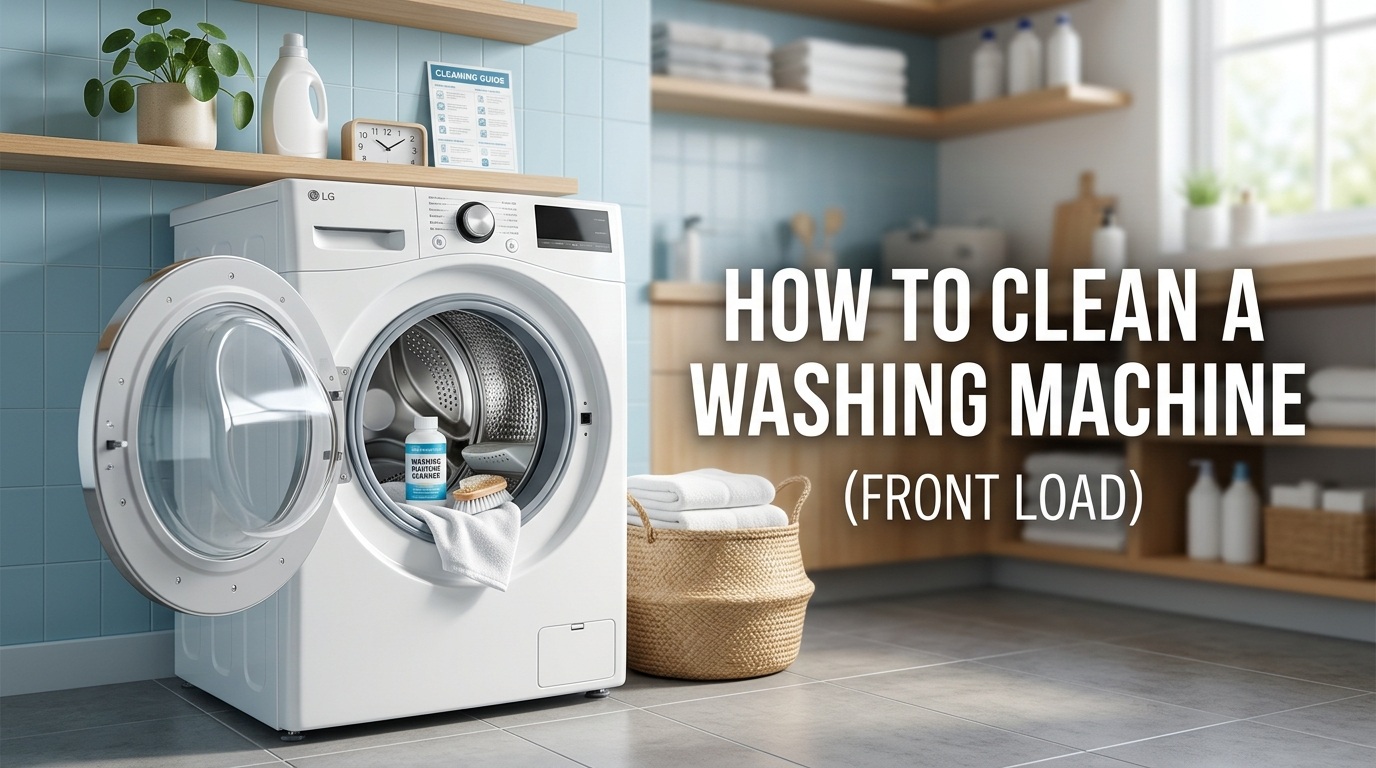

A Complete Guide to Remove Odors and Mold
Written by Sarah, Professional Home Cleaning Expert
When I first opened a front-load washing machine and discovered a musty odor emanating from a location designed to clean clothing, I understood why so many people are dissatisfied. Many people clean their floors, bathrooms, and kitchens on a regular basis, but often neglect to clean their washing machines as well. I’m Sarah, a professional home cleaning expert who has helped countless families overcome typical laundry problems caused by detergent buildup, trapped moisture, and mildew around washer seals. In this post, I’ll explain how to properly clean a washing machine, particularly front-load machines, and give basic tips for keeping your washer fresh and running smoothly.
A front-load washing machine should be cleaned by focusing on the areas where moisture and residue collect: the rubber door gasket, detergent drawer, drum, and drain filter. Regular cleaning with appropriate products and good drying habits can help prevent unpleasant odors and buildup.
Why Does My Front Load Washer Smell Bad?
A washing machine cleans dirty clothes, but the machine itself can collect dirt, moisture, and residue over time. Front-load washers are especially likely to develop odors because the door seals tightly, which can trap humidity inside.
Common reasons your washer smells bad include:
- Water remaining inside the drum after cycles
- Mold or mildew growth around the rubber gasket
- Excess detergent or fabric softener buildup
- Dirty detergent dispensers
- A clogged drain filter
- Leaving the door closed after washing
Many people assume that running more laundry cycles will solve the problem, but regular washing does not always remove buildup from hidden areas.
The good news is that a proper cleaning routine can usually refresh your machine.
How Often Should You Clean a Front Load Washing Machine?
The ideal cleaning schedule depends on how often you use your washer.
A simple routine:
- After every wash: Leave the door slightly open to allow airflow.
- Weekly: Wipe the rubber door seal and detergent drawer.
- Monthly: Run a deep cleaning cycle.
- Every few months: Check and clean the drain filter.
If you have a large household, wash clothes daily, or frequently use cold-water cycles, you may need to clean your machine more often.
How to Clean a Front Load Washing Machine: Complete Guide
Cleaning a front-load washer does not require complicated tools. Most of the work involves removing residue from areas that are easy to overlook.
Supplies You May Need
Gather:
- Microfiber cloths
- Warm water
- White vinegar (optional)
- Washing machine cleaner
- Soft brush or old toothbrush
- Baking soda (optional)
- Gloves
Always check your washing machine manufacturer’s instructions before using any cleaning product.
Some manufacturers recommend specific cleaners, and some may advise against certain ingredients.
Step 1: Clean the Rubber Door Gasket
The rubber seal around the washer door is one of the most common places for mold and residue to develop.
The gasket traps:
- Hair
- Lint
- Soap residue
- Moisture
- Small objects left in pockets
To clean it:
- Open the washer door completely.
- Pull back the rubber seal gently.
- Remove visible debris.
- Wipe the inside folds with warm soapy water.
- Use a soft brush for stubborn buildup.
- Dry the area with a clean cloth.
Pay special attention to the bottom part of the gasket because water often collects there.
If you notice black spots that keep returning, deeper cleaning may be necessary.
Step 2: Clean the Detergent Drawer
The detergent drawer can become sticky because liquid detergent and fabric softener leave behind residue.
A dirty drawer may cause:
- Bad smells
- Poor detergent flow
- Soap buildup
Follow these steps:
- Remove the detergent drawer if your machine allows it.
- Rinse it under warm water.
- Use a small brush to clean corners.
- Wipe the inside compartment.
- Allow it to dry before replacing it.
Avoid using excessive detergent. More soap does not always mean cleaner clothes. Extra detergent can leave residue behind.
Step 3: Run a Cleaning Cycle
Many modern front-load washers have a “clean washer” or “tub clean” setting.
If your machine has this feature:
- Empty the washer completely.
- Add a washing machine cleaning tablet or recommended cleaner.
- Select the cleaning cycle.
- Allow the cycle to finish.
If your washer does not have a cleaning cycle, use the method recommended in your owner’s manual.
Some people use vinegar or baking soda as household cleaning options, but manufacturers vary in their recommendations. Check your machine’s guidance before adding anything directly to the drum.
Step 4: Clean the Drain Filter
Many front-load washers have a small drain filter designed to catch debris.
A dirty filter can contribute to:
- Standing water
- Bad smells
- Drainage problems
To clean it:
- Turn off the washing machine.
- Locate the filter access panel, usually near the bottom front.
- Place a towel underneath because water may spill.
- Remove trapped debris.
- Rinse and replace the filter.
Always follow your washer manual because filter locations and cleaning methods differ between models.
Step 5: Wipe the Outside and Door Area
The outside of your washer also collects dust, fingerprints, and detergent residue.
Clean:
- Control panel
- Door glass
- Handle
- Exterior surface
Use a soft microfiber cloth and avoid harsh cleaners that could damage the finish.
Best Products to Clean a Front Load Washing Machine
The best cleaning product depends on your machine and the type of buildup you are dealing with.
Washing Machine Cleaning Tablets
These are designed specifically for appliance cleaning.
They can help remove:
- Odor-causing residue
- Detergent buildup
- General grime
Mild Soap and Water
For regular maintenance, warm water and mild soap are often enough for:
- Door seals
- Drawers
- Exterior surfaces
Commercial Mold Cleaners
If mold is present around seals, a product specifically designed for mold removal may be needed.
Always:
- Follow label instructions
- Use proper ventilation
- Avoid mixing cleaning products
Never mix bleach with vinegar or other acids because dangerous fumes can form.
Can Vinegar Clean a Washing Machine?
Many people use vinegar as a natural cleaning option because its acidity can help dissolve some mineral deposits and residue.
However, vinegar is not suitable for every washing machine.
Some appliance manufacturers recommend avoiding frequent vinegar use because repeated exposure may affect certain rubber parts over time.
Before using vinegar:
- Check your manufacturer’s instructions.
- Do not mix vinegar with bleach.
- Use ventilation.
For regular maintenance, a washer cleaner designed for appliances may be a safer choice.
How to Prevent Mold and Bad Smells in Your Washer
Cleaning your washing machine removes existing buildup, but prevention keeps the problem from returning.
Keep the Door Open
After each load, leave the door slightly open.
This allows moisture to escape and helps the drum dry.
Remove Clothes Quickly
Wet clothes sitting inside the washer create a humid environment where odors can develop.
Try to remove laundry soon after the cycle ends.
Use the Correct Amount of Detergent
Too much detergent can create residue.
Follow the detergent instructions and consider your water type.
Clean the Seal Regularly
A quick weekly wipe of the rubber gasket can prevent larger problems later.
Common Mistakes That Make Washing Machines Smell
Many washer odor problems come from everyday habits.
Closing the Door Immediately After Washing
A closed, wet washer creates a perfect environment for unpleasant smells.
Using Too Much Fabric Softener
Fabric softener can leave residue inside the machine.
Only Washing With Cold Water
Cold cycles are useful for many clothes, but occasional maintenance cycles may help remove buildup.
Ignoring the Drain Filter
A neglected filter can collect debris and contribute to odors.
Front Load vs Top Load Washing Machine Cleaning
Both types need cleaning, but front-load machines require extra attention around the door seal.
| Front Load Washer | Top Load Washer |
| Has a rubber door gasket | Usually no front door seal |
| Moisture can remain trapped | Easier airflow after use |
| Requires gasket cleaning | Requires drum cleaning |
| Common odor issue area: door seal | Common issue area: agitator or drum |
Why Front Load Washing Machines Need More Cleaning Than Top Load Models
Front-load washing machines are popular because they use less water and are often more energy-efficient, but their design also creates a few maintenance challenges.
Unlike traditional top-load machines, front-load washers have a sealed horizontal drum and a tight rubber door gasket. This design helps prevent leaks during washing, but it can also trap:
· Moisture
· Soap residue
· Lint
· Hair
· Small debris
When moisture remains inside for long periods, it creates an environment where odors and mold can develop.
A common mistake is assuming that because the washer cleans clothes, the inside of the machine automatically stays clean. The washing process removes dirt from laundry, but residue from detergents, fabric softeners, and minerals from water can slowly build up in hidden areas.
Signs Your Front-Load Washer Needs Cleaning.
Many people wait until their washer smells awful before cleaning it. However, your equipment frequently emits warning signals before scents become visible.
Look for the following frequent signs:
1. Clothes smell musty after washing
If newly cleaned towels, clothes, or bedding smell wet or nasty, the washer may have accumulated residue.
This frequently occurs because odor-causing accumulation stays inside regions where water does not completely rinse.
2. Black spots around the door seal
Small black markings on the rubber gasket might indicate mold or mildew growth.
Check:
• The gasket’s bottom folds
• Inner borders.
• Water collection areas
Clean this region on a regular basis to help avoid accumulation.
3. Detergent drawer becomes sticky
A slimy detergent drawer indicates that soap and fabric softener are not properly washed away.
Over time, this residue might lead to disagreeable odors.
4. Water remains after a cycle
Standing water near the door seal or within the filter area might indicate:
• A blocked filter.
• Drainage concerns.
• A maintenance issue.
Deep Cleaning A Washing Machine After Months Of Neglect
Sometimes a fast wipe is insufficient, especially if the washer has not been cleaned in a long time.
For a neglected machine, take a more in-depth approach.
Step 1: Completely empty the washer
Remove any garments, detergent containers, and things from your pockets.
The optimum time to clean the machine is when it is empty.
Step 2: Inspect Hidden Areas
Check:
1. Rubber gasket folds.
2. Detergent compartments.
3. Door edges.
4. Drain filter.
These locations tend to acquire the greatest residue.
Step 3: Clean the removable parts separately
1. Remove it gently.
2. Soak in warm water.
3. Scrub the corners with a gentle brush.
4. Allow to dry completely before reinstalling.
Small brushes are ideal for reaching small spots.
How to clean the rubber seal on a front load washer?
Typically, homeowners notice issues with the rubber door seal first.
Why does the seal get dirty?
The gasket collects:
• Water drops.
• Laundry fibers.
• Hair
• Regular maintenance is necessary for detergent residue, which remains moist after washing.
Best Cleaning Method
1. Gently pull back on the rubber folds.
2. Remove any visible clutter.
3. Clean with warm water and mild soap.
4. Let dry fully.
Avoid using sharp instruments since they might harm the rubber.
How to Clean Washing Machine Filter Properly
Many people forget about the drain filter, but it plays an important role.
The filter catches:
· Coins
· Hair
· Lint
· Small objects
A clogged filter may cause drainage problems.
Steps for Cleaning Filters
1. Switch off the washing machine.
2. Let the filter access area open.
3. Put towels below.
4. Take out the filter gradually.
5. Clear the trash.
6. Reinstall after rinsing.
Because filter installation varies by manufacturer, always refer to your machine’s handbook.
Which Temperature Is Ideal for Cleaning a Washing Machine?
The cleaning technique and the machine’s instructions determine the temperature.
Warm or hot water is used in many washer cleaning cycles because heat can assist remove residue.
But:
• Always heed the advice of the manufacturer.
• It’s not always the case that hotter is preferable.
• Certain parts might need particular cleaning guidelines.
Selecting the maximum temperature is not as important as routine maintenance.
How to Eliminate Washing Machine Odor Permanently
Cleaning eliminates present odors, but habits keep them from recurring.
Create a laundry maintenance routine.
A basic routine:
After every load
• Remove clothing instantly.
• Keep the door slightly open.
• Wipe away excess water from the gasket.
Every week
• Inspect the rubber seal.
• Remove detergent residue.
Every Month
• Run the cleaning cycle.
• Inspect drawers and filters.
· Consistency avoids significant accumulation.
Can Too Much Detergent Make a Washing Machine Dirty?
Yes. Many people assume that using more detergent results in cleaner clothes, yet excess detergent might leave residue.
This residue may gather.
• Inside the drum.
• Around the gasket.
• In detergent chambers.
Signs you could be using too much detergent are:
• Clothes feel stiff.
• The washer smells terrible.
• Soap remains after many cycles.
Use the recommended quantity according on the detergent type and load.
How to Clean a Washing Machine Naturally?
Some homeowners like natural cleaning methods.
Common household ingredients include:
• White vinegar
• Baking Soda
However, “natural” does not always imply suitability for every appliance.
Before using a homemade cleaner:
• Check your washer’s manual.
• Avoid mixing ingredients.
• Never mix vinegar and bleach.
For routine maintenance, appliance-specific cleansers are frequently created expressly for washing machines.
How to Prevent Mold in Washing Machines
Mold prevention is easier than removing mold after it develops.
Follow these habits:
Dry the Washer After Use
· Moisture is the biggest contributor to odor problems.
· Allow airflow by leaving the door open.
· Use less fabric softener
· Fabric softener might leave a layer in the machine.
· Reduce use if you observe any accumulation.
Cleaning Towels and Bedding Correctly
Items such as towels might retain more moisture and detergent residue.
Make sure:
• Loads aren’t overcrowded.
• Enough room for proper rinsing.
Frequently Asked Questions
How frequently should I deep clean my front-loading washing machine?
Most families benefit from a monthly thorough cleaning. If you wash clothing regularly, have a big family, or smell scents, you may need to clean it more frequently.
Why do my clothes smell so terrible after washing?
Garments may smell foul due to buildup in the washing machine, retained moisture, using too much detergent, or keeping wet garments in the drum for too long.
Cleaning the gasket, detergent drawer, and drum can help reduce odors.
Can I use bleach to clean my washing machine?
Some manufacturers accept bleach as a cleaning agent, while others prefer particular products. Always check your washer’s manual first. Do not combine bleach with vinegar or other cleaning products.
How can mold be removed from a washing machine seal?
Wipe the seal with an appropriate cleaner and remove any apparent accumulation with a gentle brush. If mold appears periodically, the region may require more thorough cleaning or the replacement of damaged elements.
Should I leave the washing machine door open?
Yes. Leaving the door slightly open after washing promotes air circulation and moisture evaporation, lowering the risk of odor development.
Final Thoughts: Keep Your Washing Machine Fresh with Simple Habits.
Learning how to clean a washing machine is an essential component of household upkeep. A clean washer not only looks nicer, but it also helps to eliminate unpleasant odors created by retained moisture, soap residue, and buildup.
The most critical habits are simple: wipe the door gasket, clean the detergent drawer, let the machine dry, and maintain a consistent cleaning routine.
A few minutes of maintenance every week may help keep your front-load washer clean and ready for each load.